Γεια σας (Greek for “hello”)! This is the fourth installment of Pondering Across Europe. Ep. 1 was about Athens, Ep. 2 about Thessaloniki, Ep. 3 about Liège.
After two episodes of being hard on Greece, this one starts looking for the good: the summer that keeps pulling all those Greeks living abroad back, sketched from experiences of two nights on Tinos with my parents and sister, our first holiday together in 28 years.
The ending on the Greek series had to come in two parts, and this is the first. If you missed Liège, catch up with Ep. 3 before this one.
Wear your boots, then. And yes, this time, since my dad’s actually a part of the story, he did wear them. Πάμε!
Liège, Liège is burning as I write these lines. Liège is in ruins, and its sky cries tears of regret. Fall is here as glass shatters and tear gas grenades fall and fires rage from garbage bins and pits; there’s only conflict to meet your eyes, scenes of a first-world battlefield. There is nothing to remind us of the cheerful summer left behind anymore, but the fond memories that stubbornly refuse to fade amidst the chaos.
October has so far been marked by student protests, fiercely reacting against austerity measures (or, what non-Greeks will understand, disinvestment) in education that have been witnessed all across Europe (Axios, 2026). A single demonstration at Lycée Saint-Exupéry in a Parisian suburb was the spark that ignited an angst long festering among Europe’s youth. Belgium is no different, and currently Liège, as a forsaken student city, has seen some devastating action, all shot in the grey background of the Belgian skies, the grey smoke of the conflict rising from the ground.
Walking through these scenes, staying enclosed in cafes, seeing students run, being blocked by policemen from going in one’s direction, prohibited by decree from being in groups of more than three, I caught myself reminiscing. Gone, past gone, are those hot, humid, happy days spent in Greece, shared with friends and family. In that motherland we, half a million Greeks, have forsaken after the crisis in droves, for countries abroad such as Germany (250.000 in the last decade alone), the UK, the Netherlands & Switzerland, the US & Australia, and all other places imaginable (Pratsinakis, 2022), seeking a life within an environment that we can trust will offer us what we deserve.
We left for a better future. Yet it increasingly seems that we brought our curse with us. What stability the other Europeans seemed to have is challenged, isn’t it? Germany is past the event horizon of voting for far-right ideas with AfD’s recent numbers; France’s divisions between deep shades of left and right, at a time when the economy seems like a grenade ready to burst, borrowing at higher rates than Greece; and the United Kingdom seems merely ungovernable, ready to break into its fundamental components as many parts of the union voted for pro-independence politicians, seeking different futures and priorities. Thus, what once looked like paradise revealed itself to be the same underlying hell. Only worse, because for us, it remains foreign.
Table of Contents
A summer dream of a nation
So, we all end up returning to Greece. In times like these, of moodiness or conflict, our minds wander over the memories we’ve built in our lands. Never considering the bad times, only the good: the golden rays and bleeding sunsets, the human warmth of constant touch and affection we sometimes can’t receive in the foster environments of choice.
And even physically, while not forever, in every chance we get, we come back. Even if, within us, there is hidden or exposed contempt for a future that was never held for us, we cannot help ourselves.
We seem attracted like moths to light, to its calm seas and endless mountains sprawling over them, its foods that nourished us and were tied to memories, and most importantly, we need to see its people. These people we hate the most and trust the least, but love to be around in every instant. Those open, playful hearts that are open to discussing anything and anywhere, whether you or not, making jokes with absolute strangers and getting to know you, or ditching everything they do if it means they can help. Those damn Greeks, those damn people raised and conditioned as we have been.
I’ve spent the last two Pondering Across Europe editions on Greece sounding overall negative about my own country. Partly for impartiality’s sake, partly because it hurts that what could have been a paradise to live in is nothing of the sort. But there are positives, many positives, I need to cover. And to begin, it is but the obvious; Greece is, if not the best, one of the best nations for one to spend their summer holidays in.
The boom of the tourism industry, in numbers
Greece’s tourism industry has broken record after record since the pandemic. In 2024, it stood inches away from the top ten most visited nations globally, ranking 11th with 36 million visitors within that calendar year (World Tourism Organization, 2026). It sounds impressive, yet it gets even more, once you account for how small the country is comparatively to all others on the list: a nation of just over 10 million people receiving 3.5+ times its population annually, while being tiny compared to its competitors; the UK is the closest country in size to the top ten, yet still 100.000 km² larger than Greece.
2025 was even more successful. Bank of Greece reports a 5.6% increase in inbound visitors, reaching 37.98 million (Bank of Greece, 2026). And while aggregate reports for the past year don’t exist yet, individual country accounts show Greece could rank in the top 10, given Germany’s 0.8% fall to 37.1 million tourists for the year. For the record, both Japan and the UK saw their visitors rise as well, so there is always the chance of an outstanding increase from one of Greece’s competitors from below overtaking it. (Nippon, 2026; OECD, 2026).
The positives don’t stop at tourism data, as Greece enjoys increased popularity in related areas. One of these is gastronomy; TasteAtlas’s 50 Best Cuisines in the World index (TasteAtlas, 2026), aggregating information like ratings, rankings, opinions, etc. to shape its lists, ranked Greece 1st in 2024 and 2nd in 2025, just behind Italy’s impeccably branded & renowned cuisine. And, at the moment, the country enjoys positive outlooks from abroad; while not offering definite results, Nira Data’s Democracy Perception Index identified that Greece enjoys a +24 average net perception score, with the highest score being +36, currently held by Switzerland & Canada (Alliance of Democracies, 2025 & 2026).
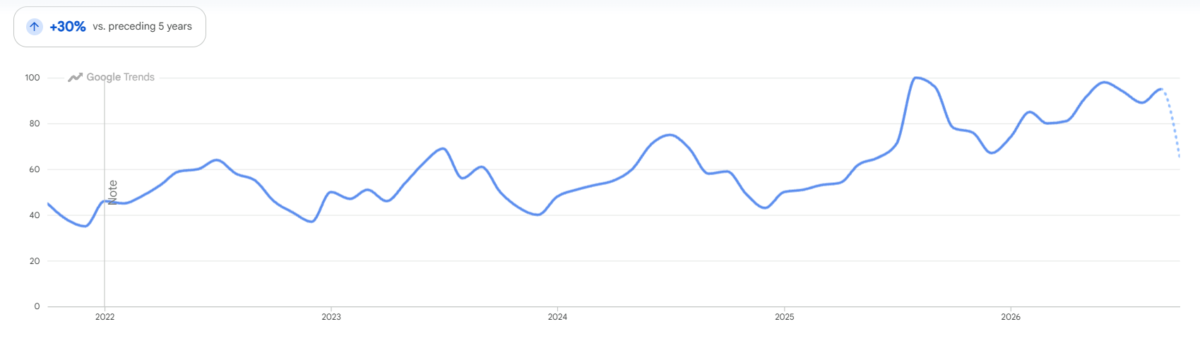
And, overall, things happen that bring Greece to the forefront more often than before. Greece enjoys an upward trend in Google searches worldwide. Movies about Greek epics reached the mainstream this year. Greek football is even seeing a renaissance after a 12-year dormancy, with a new generation of young talents (ABSOLUTE ballers, the likes of Tzolakis and Tzolis, who rock the Premier League as we speak; Dortmund’s new stars Karetsas and unlucky Konstantelias; Roma’s Koulierakis; and so many more) getting up the scene. It’s becoming, once more, a better time to be a Greek.
What does it feel to spend a summer in Greece?
Numbers or facts would mean nothing without the experiences to describe them, of course.
As I’ve already mentioned, last summer was spent almost entirely in Greece; I couldn’t help myself from going a bit to Wroclaw, Poland – and tak, Poland will be one of the next focuses of Pondering Across Europe, moi polscy przyjaciele – Spain, which is a useful comparison to Greece, since it’s the most visited country and a powerhouse of global tourism, and Bulgaria, which was a needed layover to reach Spain in the first place. But apart from those excursions, I immersed myself in every other moment of my past summer, from the moment I left Lithuania to the time I departed for Liège, in Greece.
It was a peculiar one for me. For starters, it was not as hot as I would have expected; in fact, the summer heatwaves that hit Europe hard this year almost forgot Greece, which stayed with survivable low 30c for most of the time; most curiously, I saw six instances of rain through July. Some health problems and adjustments kept me inside for two weeks in July, burning with fever and aching.
But it was also the summer I came feeling the urge to stay here, to let myself feel Greek once again, as I was homesick, too much so.
Silent wishes on an Orthodox Acropolis
The summer started landing in Athens, but that short trip would have its unique ending. It was in late June that I convinced my parents and sister, succeeding in having holidays together. Last time this happened, it was a “normal” family of a couple in their mid-30s, with one kid being 13 and another 3. Now it was a group of 4 vastly different adults, each with their own troubles: a 63-year-old dude who wishes to go nowhere outside his home village, a 62-year-old woman with a recent craze for learning Chinese hand acupuncture, a 41-year-old mom of two rascals in desperation for any escape from them, and a 31-year-old wandering soul (well, if you’ve been reading along, you know enough about me already). If math isn’t your strongest skill, that accounts for 28 years this family hasn’t shared a holiday together. Four tortured souls with their own sets of problems; how would this turn out?
We chose Tinos, as Tinos was the one destination that could convince us all that having holidays together is a good idea. My mom always wanted to go to its renowned Panagia Evangelistria church, overseeing Tinos’ chora, for a tama, a vow tied with an offering made to a saint, type of an oblation in Christian Orthodoxy; my dad’s second employment being a cantor for Orthodox Churches helped make the case; my sister just wanted to try the local delicacies and tour around without her children for once, maybe feeling a child herself; and I, while I was excited to visit the Cyclades for the first time as a Greek (remember, I am 31), quite frankly, didn’t care much; I just wanted to see all those similar DNAed bastards in one damn spot outside of our home, Thessaloniki, or our village.
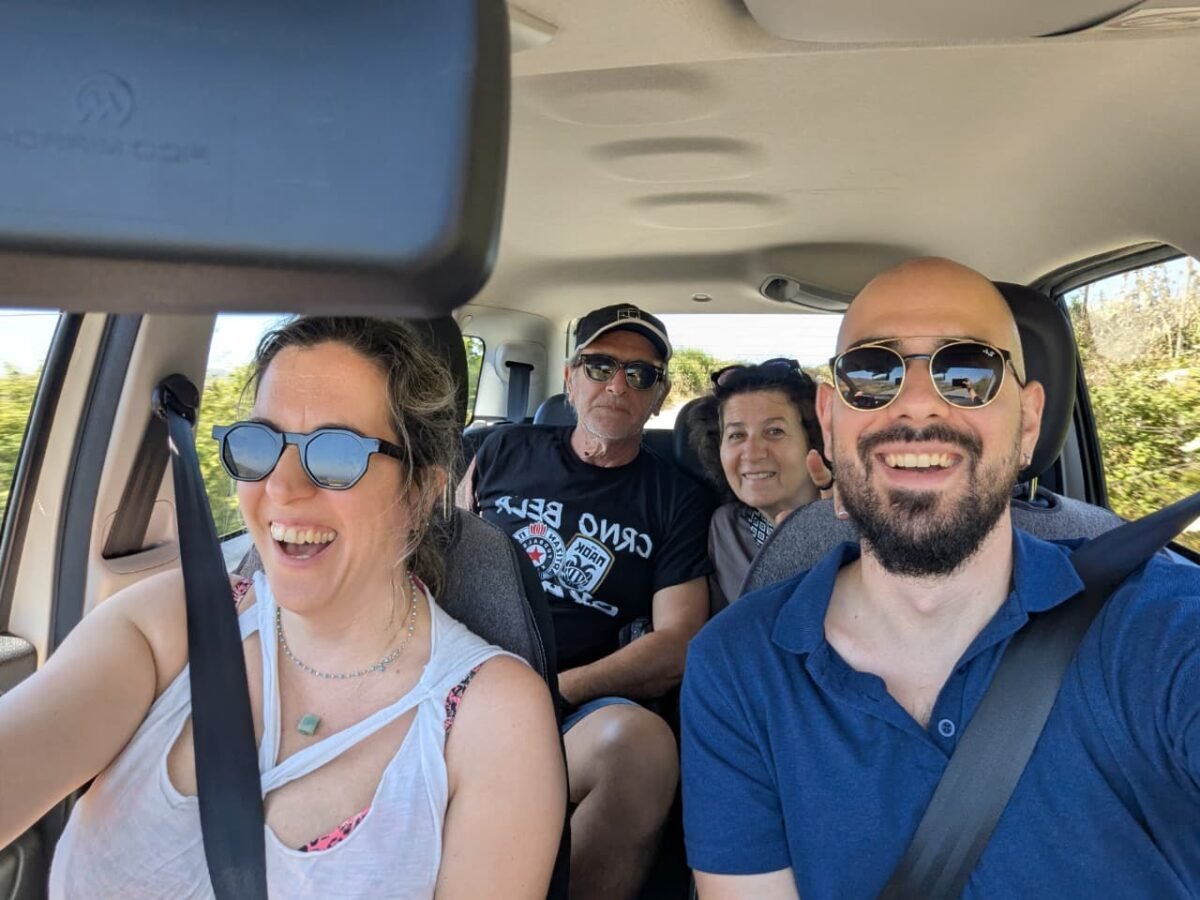
We had two nights, so we lost no time being the dysfunctional family that we are. Even before reaching Tinos, literally even before boarding our ship in Rafina, we had our first quarrels. Why? It took me less than an hour to remember, “Oh, I was the spoilt youngest”, thus the most annoying of the bunch, and decided to take pics of my mom and make them into stickers for our group chat; we all laughed at the outcomes except my mom, who threatened to depart to Thessaloniki even before the trip started. Our ferry called for its passengers, and we all got aboard; the person checking the tickets refused to accept my student ID as it was foreign, so we all ganged up on him. He didn’t budge; I paid full fare, but… χαλάλι (“worth it, gladly given”, a loanword from Turkish Helal, which originates from the well-known Arabic word halal/حلال, meaning permissible) as we say in Greek. It was what made us forget our past quarrels in an instant and enjoy the trip. We shared snacks and laughs, commented on how much of an asshole he was, and snapped silly pictures of ourselves left and right – after I promised my mom I wouldn’t make them into any stickers – all while overlooking the blues on the Aegean.
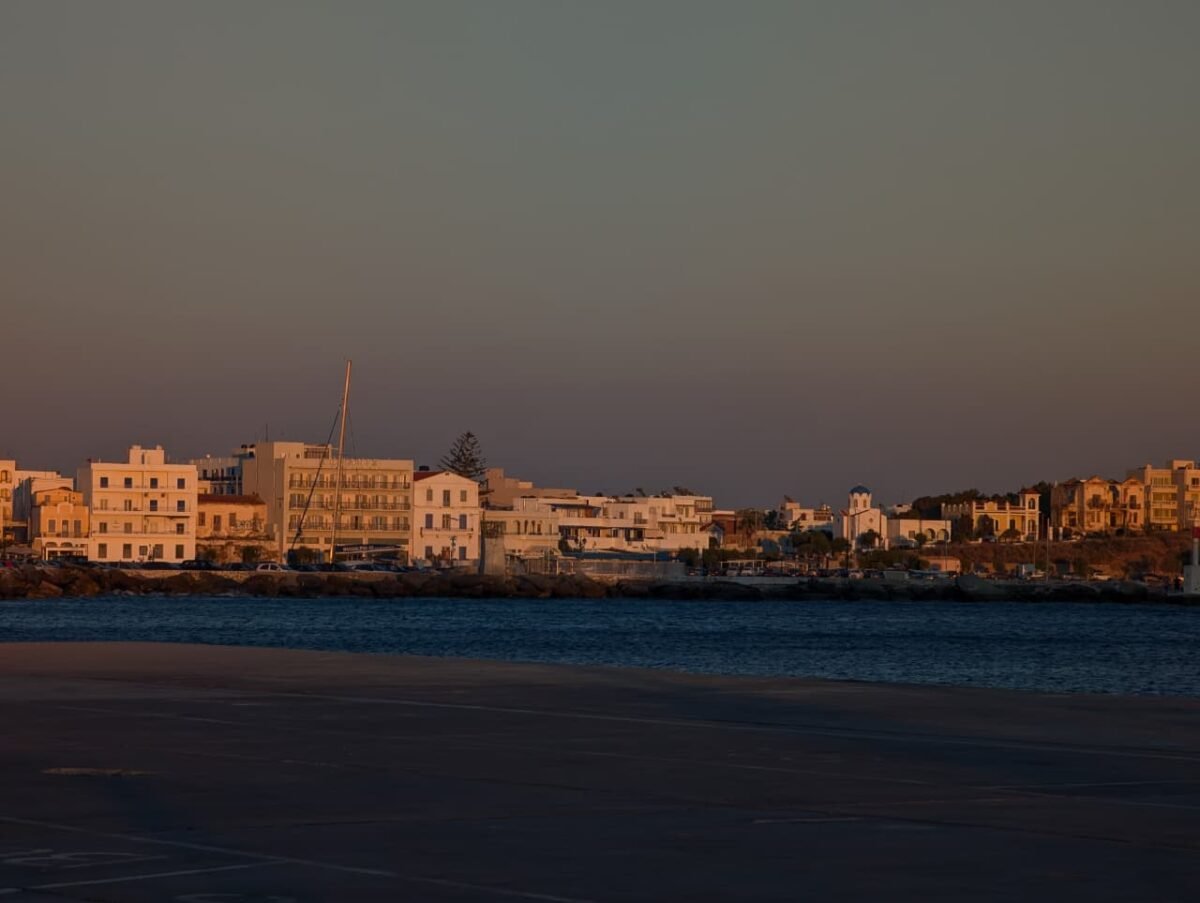
Our Airbnb was a short walk away from the port, right outside the Catholic church of Tinos’ hora. We were happy to reach it so quickly, but my dad seemed the most cheerful, as he was visibly charmed by the owner of the Airbnb, deepening his voice to say “Pavlos, enchanté” in the doggest way possible. After the obligatory roasting on this, I took a shower and left first; we couldn’t find each other in the town’s short, confusing streets, but in the end we managed. We sat down, ate a pizza, and headed to the church at night, where crowds wouldn’t be present to ruin our experience.
None of us was crazy enough to do the full road to Panagia Evangelistria, which requires pilgrims to crawl on their knees along the carpeted strip up the main avenue, from the port all the way up to the church. We did that, however, in the last part, from the church’s gate to its top. Me included, even if I am an Agnostic at best. It was tough on the knees, but bearable. I did think of a wish while I was doing it, but I can’t tell you, as this would void it, can I?
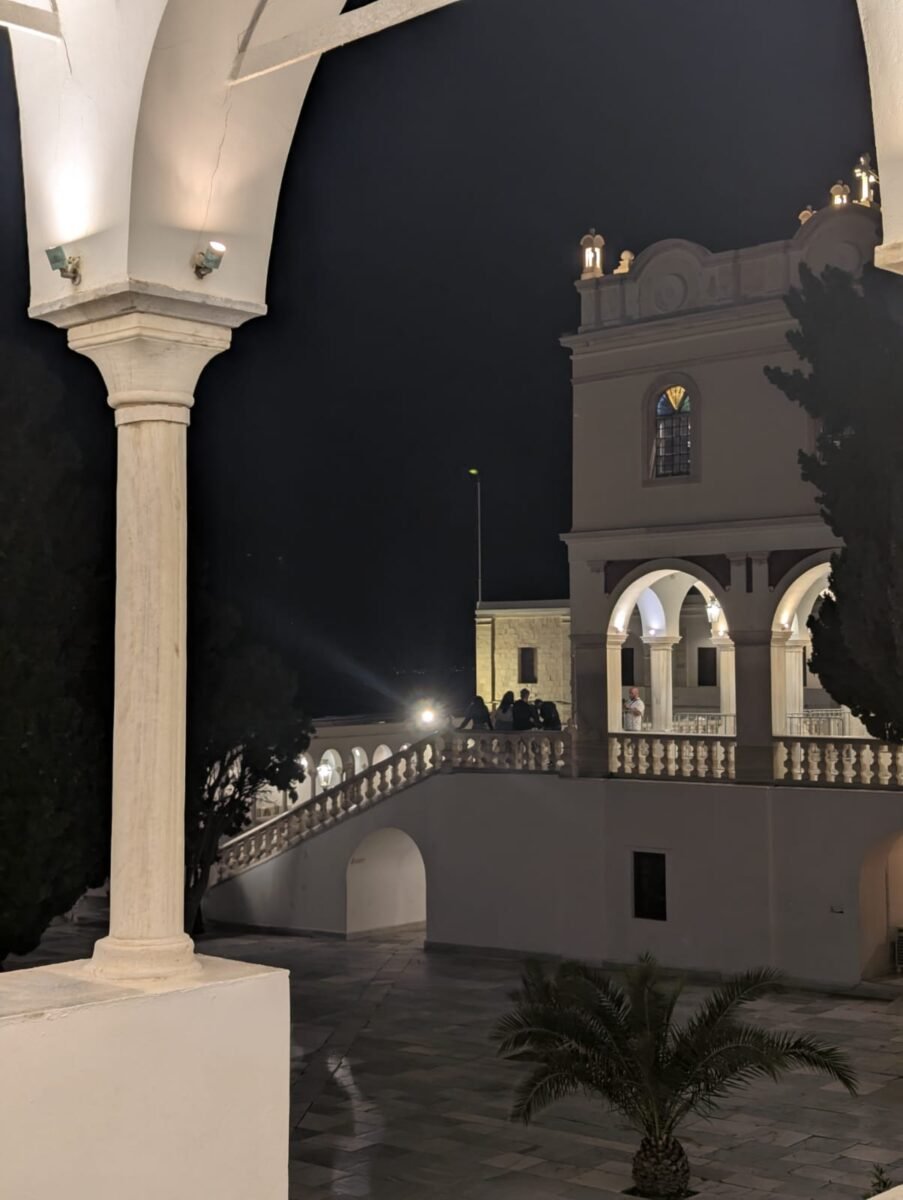
The church was calm, apart from the few comments of the strangers, a Babel tower erected for Christian saints but with the same blessing of multiculturalism, with all its various languages. Walking around those marble-floored corridors, an experienced visitor to Greek Orthodox churches sees the difference in extravagance found up there, feeling more like a palace than an austere worship of the Almighty. I was looking at my parents and sister being excited, taking pictures, having fun, yet I felt the urge to stand afar and observe them. I missed them. I missed them so much and thought that they deserved a break from the life they chose, back home. Away from the trivial matters that plague them: money not being enough, groceries getting worse and worse, things not working as they should. There was some time for them to unwind, and instead of being citizens, experience the better side of Greece, the one you get as a visitor.
Twists & Turns of Barren Tinos
The next morning, our only full day on the island, my sister and I took the liberty of renting a car. My parents thought we couldn’t afford it and it would be better to go by bus; but we knew better than that, so I left them at church to get their blessing, and I went ahead to search for prices. When I found the one I liked, I got our small Fiat Punto and went up to the church to receive them. Sadly, it was a manual, so the first hundred meters the car must have felt like it was having constant hiccups. My sister took the wheel out of pity; I took the navigation and the playlist duties, and our new kids – our parents – took the backseat. And as all my family was waiting outside the church for me to bring the car, my dad was definite: “If he takes the wheel again, I am out”. I never drove on the trip again.
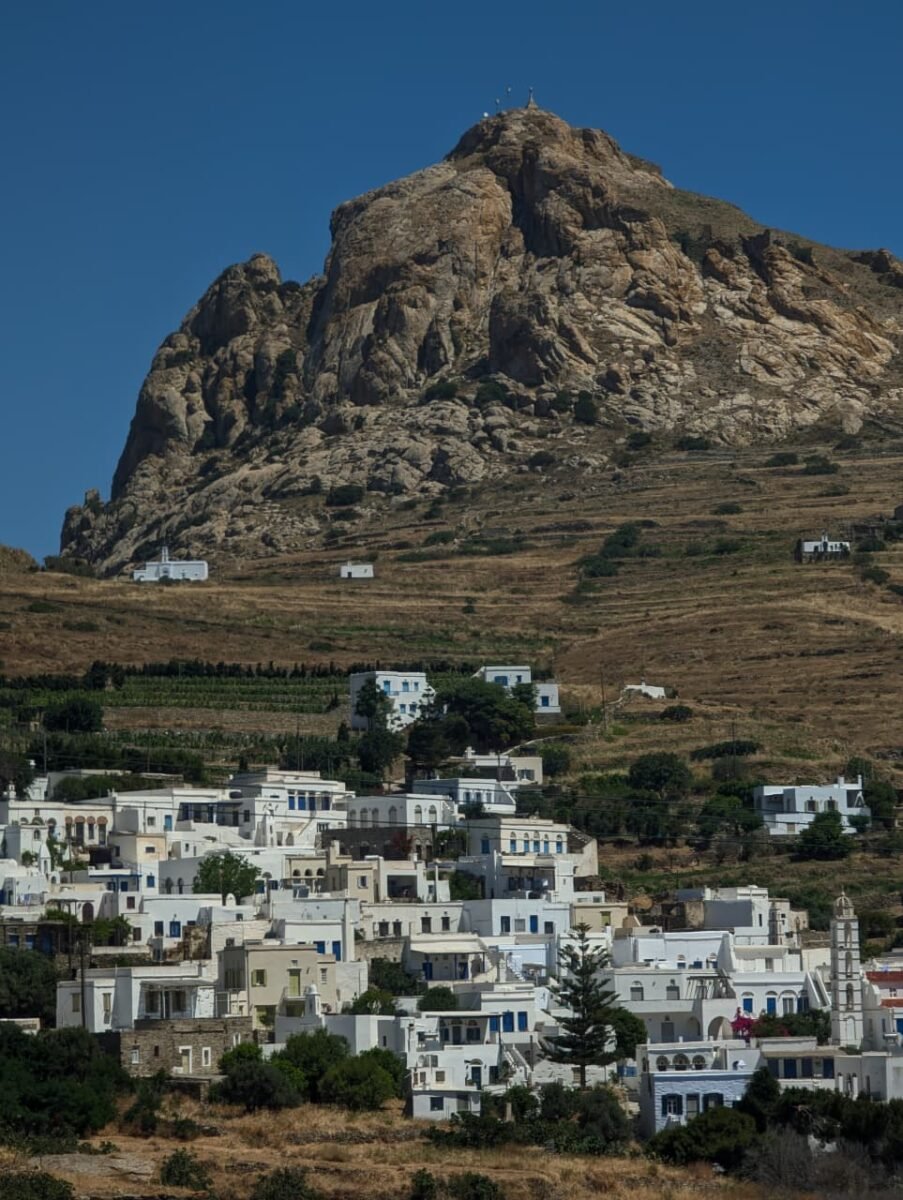
Tinos proved to be exquisitely charming, in its own way. As the last island of the Cyclades to fall to the Ottomans in 1715, its Venetian influence cuts deep, from church architecture to food to even people, dividing the population into Orthodox and catholic communities that harmoniously inhabit the island. Navigating its cliffs, the eye meets golden, barren lands inhabited by sun-dried grass, wheat, and fragrant herbs. Occasional houses and communities of white and blue, the signatures of the Cyclades, never feel out of place. It’s beautiful. One of the many, many shades of beauty one can find within the Aegean, within Greece overall; each of them can be found one small boat hop away, occasionally many contradictory ones, within individual islands themselves.
The Falling Tale of Tinos Sculptor, Chalepas
Except for its unique place in local religion, Tinos hosted some interesting personalities; its most famous being Yannoulis Chalepas. A Greek sculptor with an obvious talent for his craft from a very young age, he was born in 1851 to a family of marble hewers, the ones preparing the marble for its future artists’ visions. This gave him the raw materials to work and show his passion, and show his passion he did, receiving scholarships to study in Munich. But life was soon to give him struggles he wouldn’t manage to overcome for long.
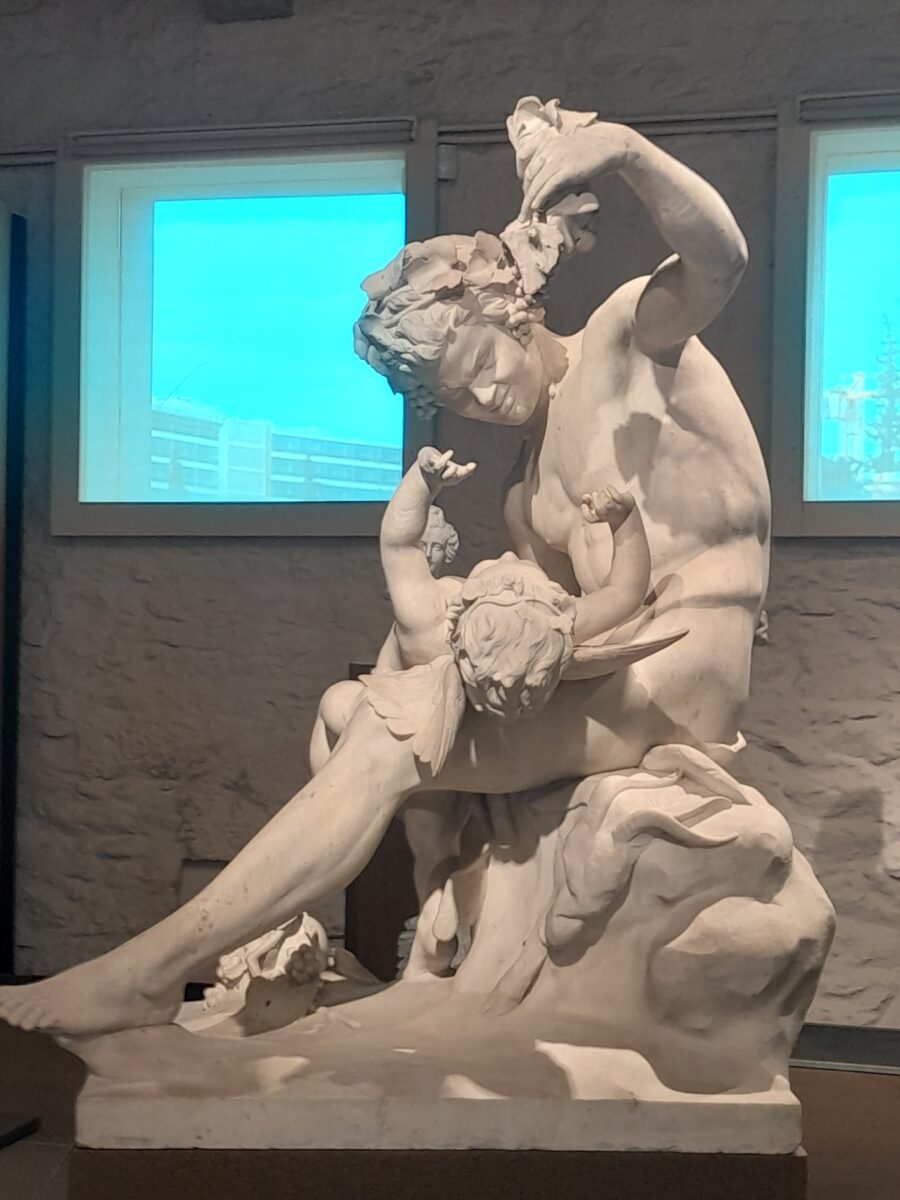

As Icarus’ tale dictates, humans are bound to limits that, if not respected, bring dire consequences. It’s a fate cursed to many humans who dared to challenge their mortality and, in their pursuit of their maximization and self-fulfilment for their vision of perfect, crashed down. The tale of Chalepas, as the extraordinary sculptor that he was, shares that destructive path. His scholarship was interrupted and awarded to another (possibly due to a corrupt intervention from someone who had connections, in case you forgot this is a story about the lack of trust in Greece), thus returning to Athens in pursuit of his own work. Not even that was meant to be. Building steadiness and precision on steady rocks with his hands, his fragile soul weakened until it, itself, broke. Chalepas, isolated and devastated by his past defeats, suffered a nervous breakdown that led him to multiple attempts at suicide; both his life and his artistic life came into peril, at the hands of their own creator.
From his first episode in 1878, for a decade, his condition only worsened until he was admitted to a mental hospital in Corfu in 1888, staying there for more than a decade, not touching his chisel. He was taken away from there by his mother in 1902, a year after his dad’s death, and they went to Tinos. For years, this relationship would prove to be his harshest; convinced that sculpting took her son away, she forbade her 50-year-old son to ever touch his tools. He tried to evade her, but in vain; she destroyed all of his unfinished work she could find, and that prohibition remained until 1916.
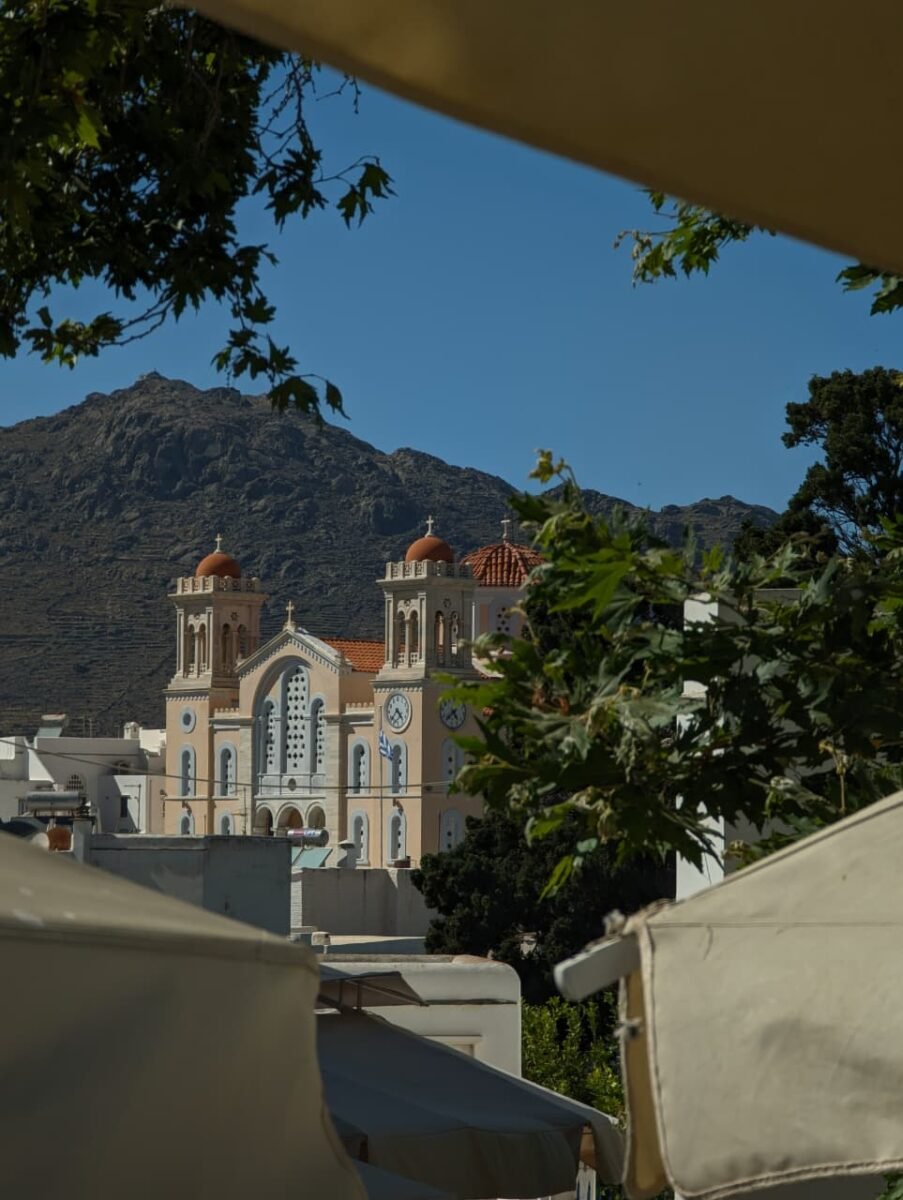
Impoverished and alone, a laughing stock for the simple-minded villagers of Pyrgos, Tinos, he turned to a cave to find clay, sculpting with what little tools he had at his disposal in his basement. And for years, this went on; a sad ending to what could have been a tale of greatness and glory, worthy of one’s extraordinary talent.
Or was it?
Story sources: (24grammata, 2013), (National Gallery of Greece, 2007)
Picking up the Pieces
Before going to Pyrgos to learn about the tale of Chalepas, we went for a quick swim at Kolympithra beach. The whole family hoped for the calm waters of the Aegean to soothe us, for some peaceful beach time that we all were really looking for. Be it fate, Poseidon, or the wind, our wish was not granted; the waves made the sea an unbeatable treat for surfers, but for us, it was not that enjoyable.
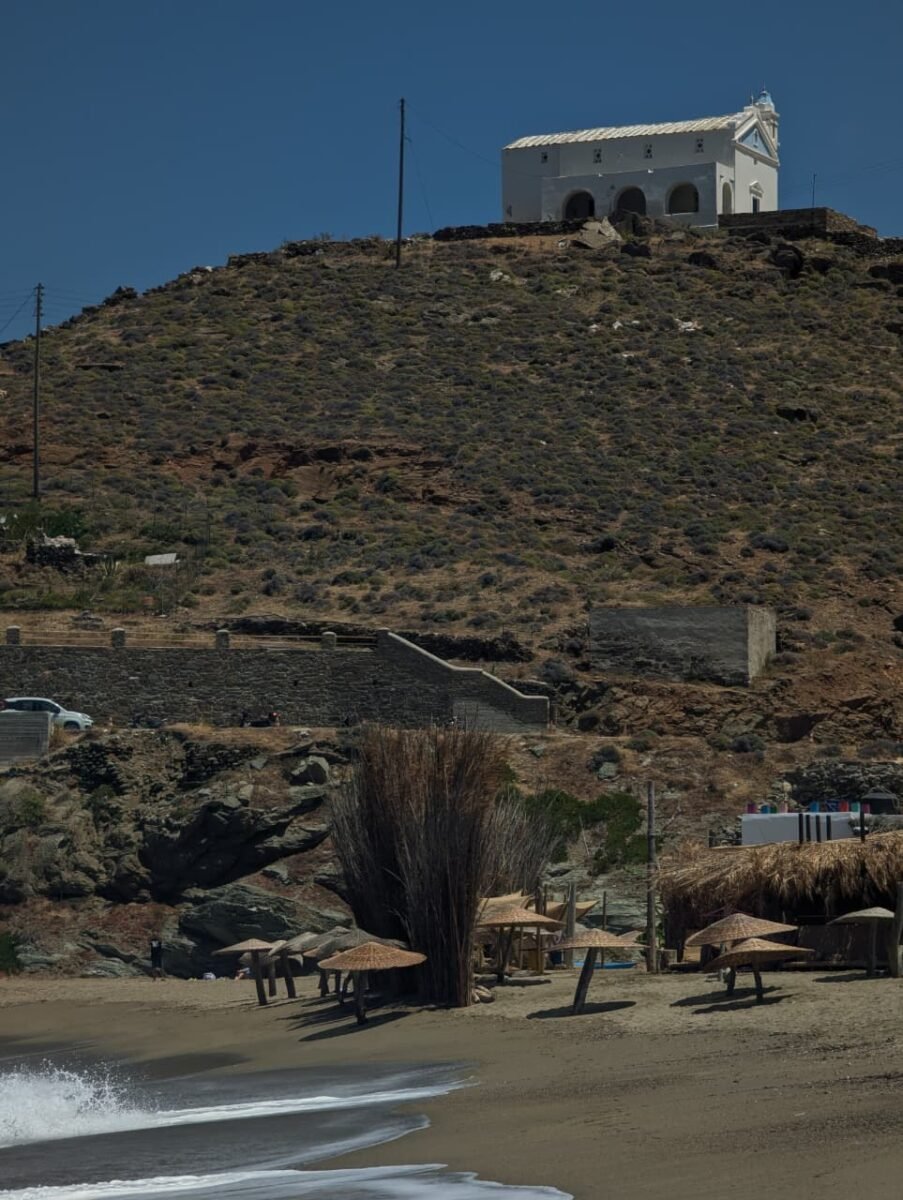
Every time I go for a swim, regardless the context, it’s a habit of mine to walk along the shoreline; I can’t stand sitting still, not until I get to know the beachfront in its entirety, diligently noticing, as if I were a scout reporting for our landing in Normandy. As I was walking, one thing occupied my mind: the damn trash. The whole beachfront was full of them, probably washed up by the waves. Cans, plastics of all sorts, nets- you name it, that beach had it all. It was a disgrace, and it left me feeling powerless, in angst about how this was allowed to happen, and for how long we turned the other way. I wished to distract myself from thinking and turned to music. There was no better song to blast than “Message in a Bottle” by “The Police”, as I was nearing the other side of the beach I so much wished to reach.
As the distance shortened, I saw a kind of makeshift shaft with a human going back and forth, as he was looking for something. The scene’s details were revealed slowly to me; he was carrying a big, black bag. He was not looking for anything in particular, after all. When mere dozens of meters separated us, I shouted to him:
- Hey sir, good afternoon! What are you doing?
- I am collecting trash! It’s a shame; such a beautiful beach, and it’s filled with them!
- All you do that all by yourself?
- Yeap. All by myself.
I wished him all the best and complimented him; he waved me back and carried on with a smile, as I turned back to reunite with my family.
A mere step later, I saw an empty blue plastic bag and stopped above it. I looked behind, watching this kind man keep on with his task. There’s no chance he’ll make it, even if he stayed here for the whole summer. Even if he did, there would be more waves, more trash coming to his side. Yet, this man looked like the happiest person on this god damn island.
I picked up that blue bag and started filling it up myself. When I reached my family, they noticed my collection.
- “Seashells?” my mom asked.
- “Nope, trash!” I proudly replied.
- “Bah, what for?” my dad reacted nihilistically, puffing on his beloved cigarettes. “The beach is full of it! It won’t make any difference.”
- “It won’t. But it’s a start”.
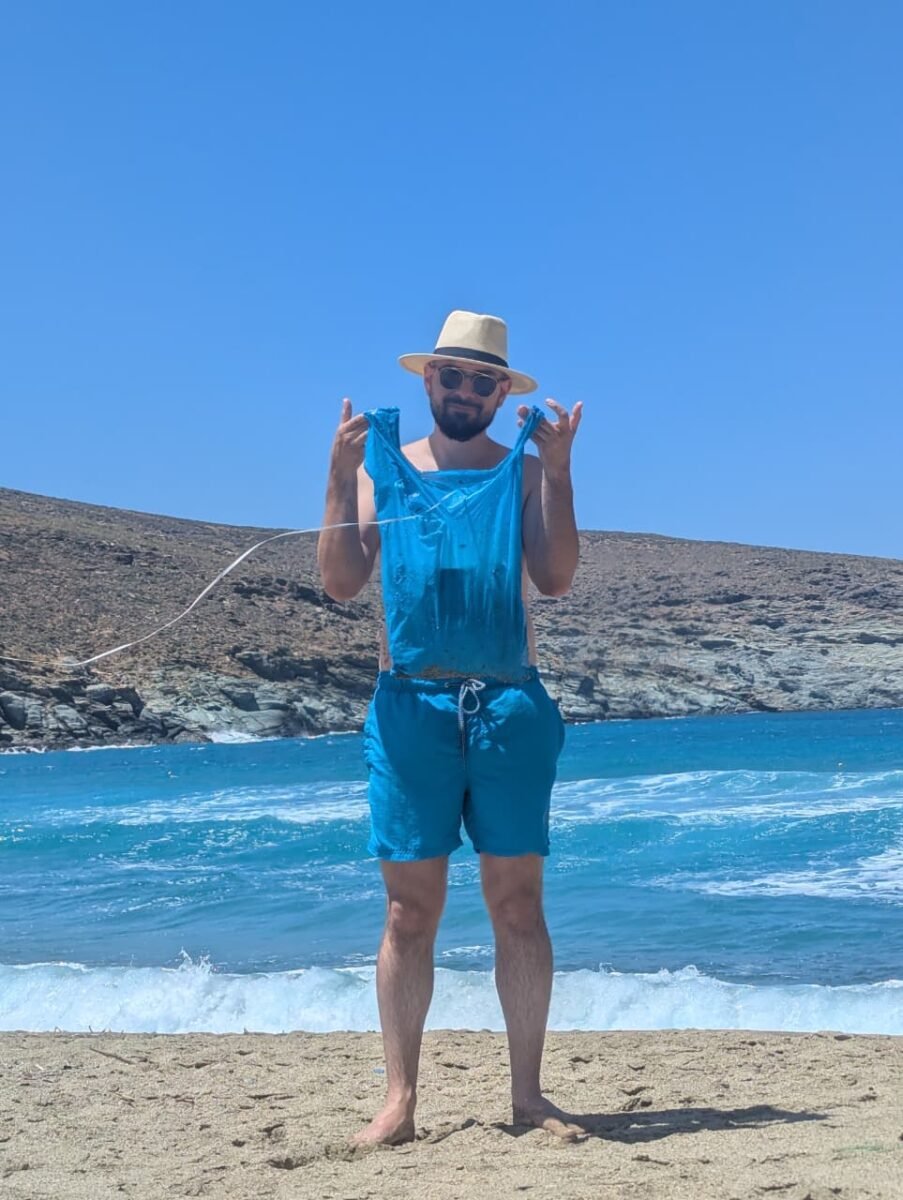
It was a start.
I realized that I had a lot of things to say for the last part, and I’ll have to break it into two pieces.
Part 2 comes in early November. A new episode, hopefully, will also come by the end of the same month.
Thank you once again for reading. Take care, until we meet again!
References
24grammata. (2013, January 6). Ο γλύπτης με την εύθραυστη ψυχή – 24γράμματα, εκδοτικός οίκος. 24grammata.Com. https://24grammata.com/%ce%bf-%ce%b3%ce%bb%cf%8d%cf%80%cf%84%ce%b7%cf%82-%ce%bc%ce%b5-%cf%84%ce%b7%ce%bd-%ce%b5%cf%8d%ce%b8%cf%81%ce%b1%cf%85%cf%83%cf%84%ce%b7-%cf%88%cf%85%cf%87%ce%ae/
Bank of Greece. (2026). Developments in the balance of travel services: December 2025. Bankofgreece.Gr. https://www.bankofgreece.gr/en/news-and-media/press-office/news-list/news?announcement=8b98e553-4142-4291-9d5e-640d14f3bbcb
Democracy Perception Index 2026. (2026). Alliance of Democracies. Allianceofdemocracies.Org. https://146165116.fs1.hubspotusercontent-eu1.net/hubfs/146165116/DPI%202026.pdf
Democracy Perception Index 2025 (2025). Alliance of Democracies. Allianceofdemocracies.Org. https://www.scribd.com/document/875316492/DPI-2025
Falconer, R. (2026, October 7). Student protest unrest spreads across Europe. Axios. https://www.axios.com/2026/10/07/europe-student-protests-france-belgium
Germany: OECD Tourism Trends and Policies 2026. (2026). OECD. https://www.oecd.org/en/publications/oecd-tourism-trends-and-policies-2026_3fd3cd75-en/full-report/germany_3c67e94d.html
Japan welcomes record 42.7 million international visitors in 2025. (2026, January 22). Nippon.Com. https://www.nippon.com/en/japan-data/h02673/
Pratsinakis, M. (2022). Greece’s emigration during the crisis beyond the brain drain. IMISCOE Research Series, 27–45. https://doi.org/10.1007/978-3-031-11574-5_2
TasteAtlas. (2026). TasteAtlas awards: These are the 50 best Cuisines & Food Cities. TasteAtlas. Www.Tasteatlas.Com. https://www.tasteatlas.com/best/cuisines
World Tourism Organization (Ed.). (2026). International tourism highlights, 2025 edition. https://doi.org/10.18111/9789284427499
Yannoulis chalepas – national gallery. (2007, February). National Gallery of Greece. https://www.nationalgallery.gr/en/exhibitions/giannoulis-chalepas/
Comments are closed.