This is a third installment in my series, reflecting on the constant changes I’ve been experiencing recently while travelling across Europe. Ep. 1 was about Athens; Ep. 2 was about Thessaloniki.
It features a weird, somehow functional marriage of travel and literature, living with hard data and sociopolitical analysis. Essays where micro meets macro, with curiosity, pragmatism, and impartiality.
Wear your boots (at this stage I am stealing your phrase, Dad. So thanks, and since it’s September 14, happy birthday!) join me in my explorations, and get ready to also ponder all across the continent. Allons-y!
Table of Contents
Alas, Liège
I’m only a few weeks here in Liège, in the heart of Europe. It feels weird. It’s different than Greece, a European Union linguistic, cultural, and economic outcast, where I couldn’t even get a train to get abroad, let alone be certain that I would survive the tale of its ticket. Yet here, I could grab a train and, in mere half an hour, I would be unmistakably still in Europe, but in all its different flavors, altering from French to German, or to Dutch.
Such a plethora of choices intimidated me, enough to keep me in place for the first weeks. There was also an accumulated traveling fatigue from the summer, combined perchance with the undeniable numerical fact that I am in my thirties – even noticing the first wrinkles definitely forming up my forehead, as grand as the Meuse breaking down Liège into islets and piers. I consoled myself by rationalizing it internally, as the need to explore the city that will be called home for the next six months, the last of my Erasmus Mundus adventures. Soon I will be, once again, not a student, but an expected workforce member, as I was before, back when I was… 23? Alas, I chose to stay put, to settle in my chic 30sqm studio, to familiarize myself with the surroundings. To be(come) a local of Liège.
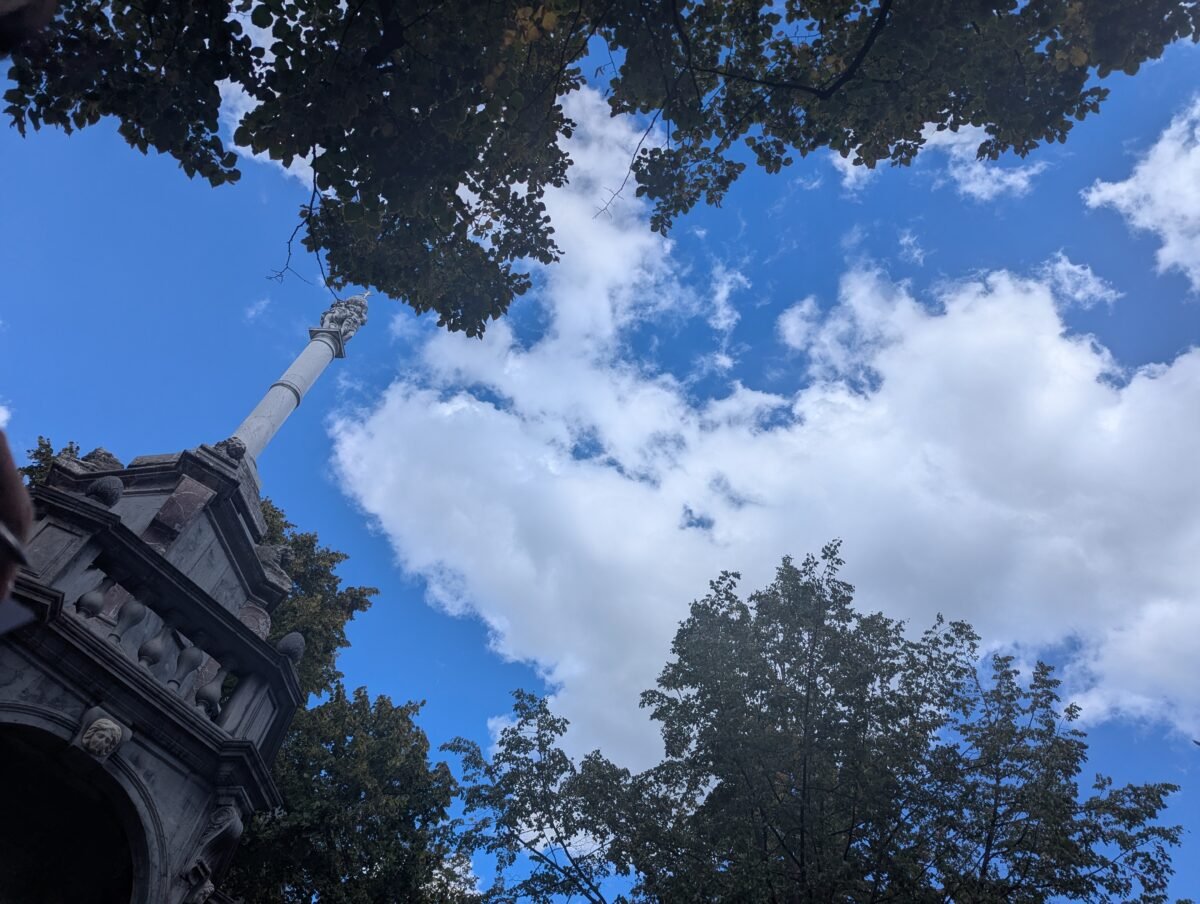
During such weeks, I’ve drifted. I don’t speak French, not yet. Six years of French in high school sounds like a lot, but I was a ruffian whose only goal was to get home to play Call of Duty and League of Legends. Instead, I had spent those years loafing my way out of learning foreign languages I deemed useless. Now? Now I have a different attitude in life and learning, and I despised that teenage self of mine for quite a long time. It took years for that angst to mellow down to understanding that he was but a scared little boy with no horizons, not the one I came to be.
How many times I fantasized about speaking with him, explaining to him all the adventures we were to embark on together, all the stories, the sufferings and joys we were to experience. I am certain he would not believe a single thing, except maybe from the fact that, indeed, our hairline situation was vain from the moment our parents met, and the high school bullies calling us bald in Greek, in reverse (σόρκαλαφ/sorkalaf, from φαλακρός/falakros; one has to admire the creativity, sometimes) would be proven right soon. Even so, that is not a pitiful comment, because somehow baldness ended up suiting me even more than having hair.
Chess Games of Solitude
I would probably scold him, though, for not paying attention in French classes. Now, I am a foreigner in a city where English is limited to “un peu”. And that’s a shame! I may never come to discuss things deeply with all those peculiar characters I meet on the street. Not without any vessel, that is, without a language that transcends our human borders. One of those? Chess.
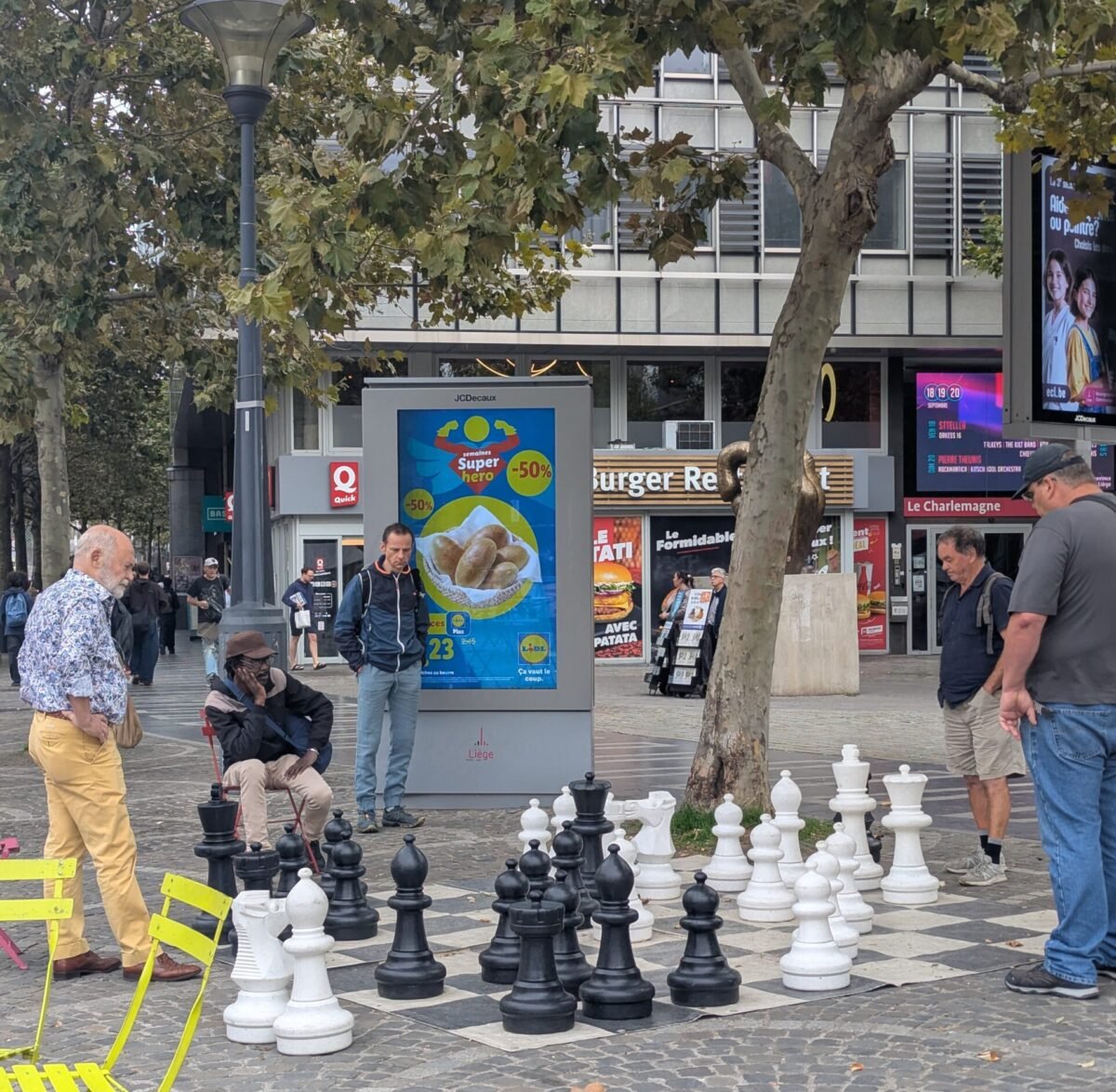
The other day, I played a chess match with a kid, no more than 11 years old, with his blond hair and serious face. His mom was on the sidelines, rooting for him. I gave the kid no mercy due to his age: I was attacking relentlessly and ended up hanging my queen like a moron. With her off the board, he had a fully winning position.
After that, it wasn’t only his mom rooting for the kid; no, I joined her internally, even though I was still determined not to hand it over and make it easy for him. I wanted him to win with how badly I played, but I still kept playing like the bastard that I am in chess, in life sometimes: never surrendering, making the best of what I have. The game came to this critical moment, with black to play:
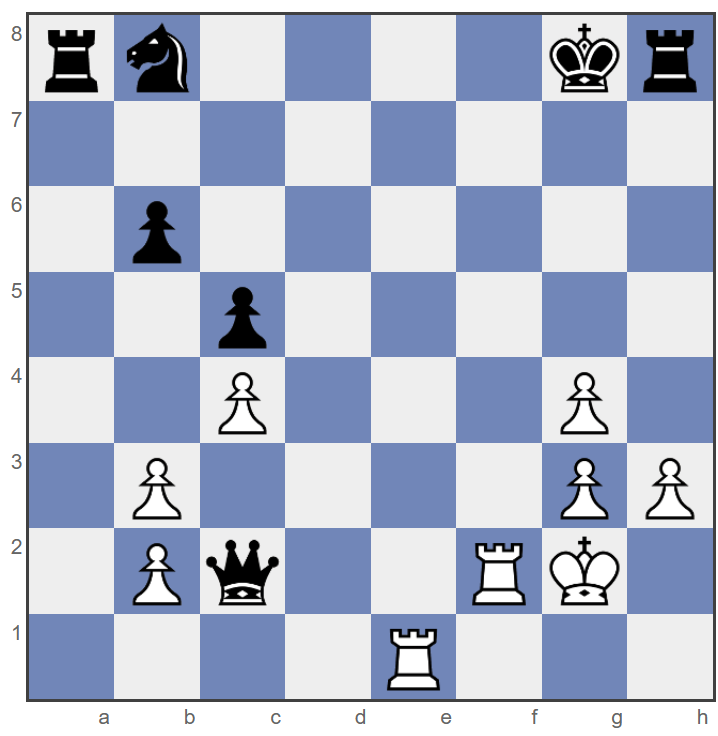
If you ever find yourself in this position, don’t try to be smart. Engines would suggest playing Qg6, yet that doesn’t have to be the human move, nor the smartest psychologically. In this position, with nothing but the two rooks on the board for your nemesis, sack your queen: Qxf2. Yes; queen=9 points, rook=5. But what would your opponent do? Wish them good luck trying to beat you with a single rook, while you have two and a horse to spare.
But the kid didn’t do any of that; he got greedy, careless as kids can be. Qxb3, grabbing a free pawn, and essentially bringing this to a sure draw by repetition. Re8+, Kg7, Re7+.
The kid stumbled. I could see in his eyes that he got stressed; he was in disbelief. There was his chance to win, and he blew it away. He tried to move the king closer to my king, hoping to find a way to break the deadlock of the draw.
Kg6, Re6+. Please, kid, I was crying from within. Please consider your next move; take the draw.
No, he didn’t get the draw. He played Kg5. I closed my eyes painfully, and when I opened them, our gazes locked. Possibly he saw that pain in mine as I went in to move my other rook. He came to see the chessboard once more, and he knew his destiny.
Rf5#. Checkmate.
I went to shake his hand. He took it like a champ, yet one could see that he was inconsolable: he didn’t cry, but he was shaken. “Parlez-vous anglais?” I asked him, mais malheureusement, il ne parle pas anglais. I wanted to explain to him what happened, but I couldn’t. I asked him his name; we’ll call him Roy. “Un bon joueur, Roy est”, I said to his mom as they were leaving; she smiled and fondly patted her boy’s head. They went on their merry way.
That was the only time I connected with anyone here, and it lasted a handful of minutes. The rest of those weeks, apart from the hours with my classmates, I spent inside my own head.
The Drifter of a City
Those first weeks in my own head were also a pied, on foot, occasionally climbing the stairs of the Montagne de Bueren, which lead to the picturesque heights of the citadelle, overlooking the city, drifting within the luscious greens of its park, sometimes with others, other times by myself. Up there, one gets to see the city in its entirety.
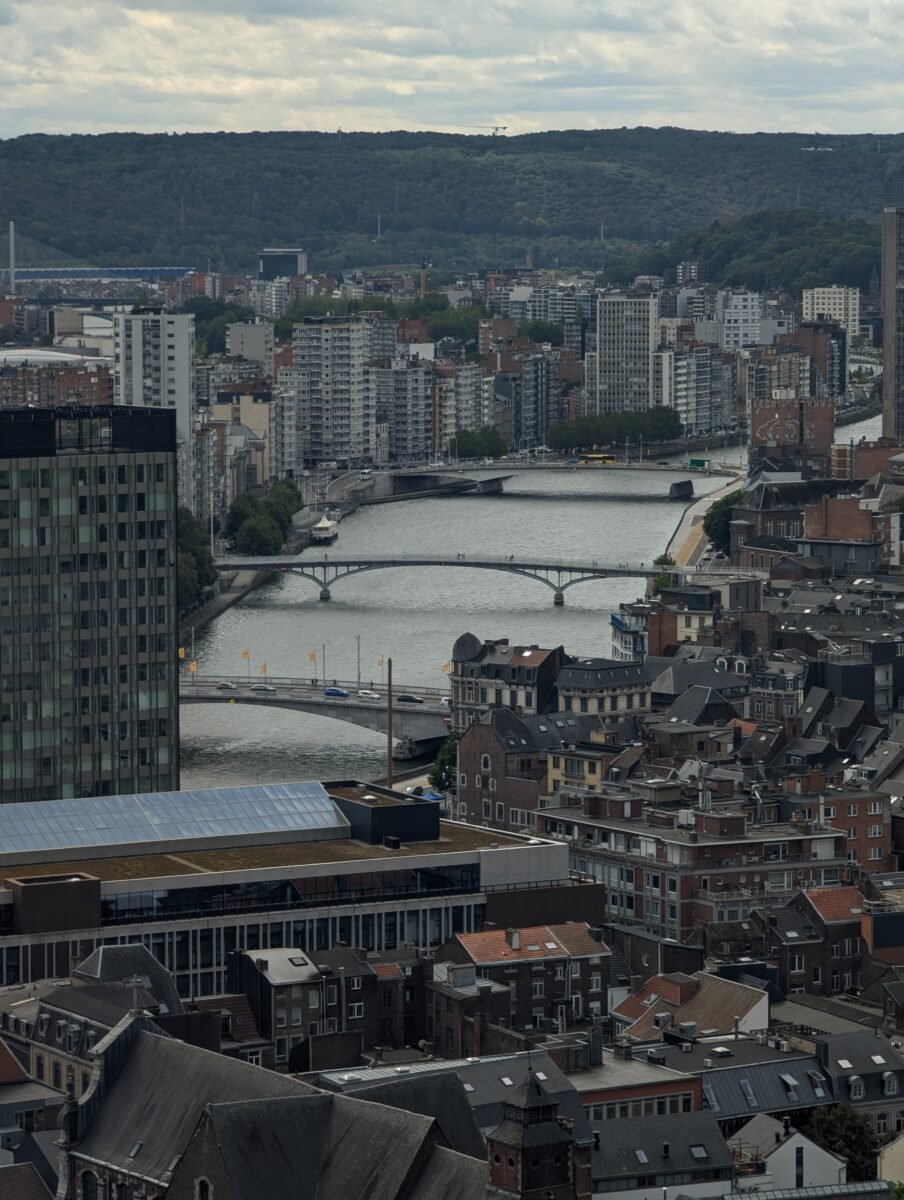
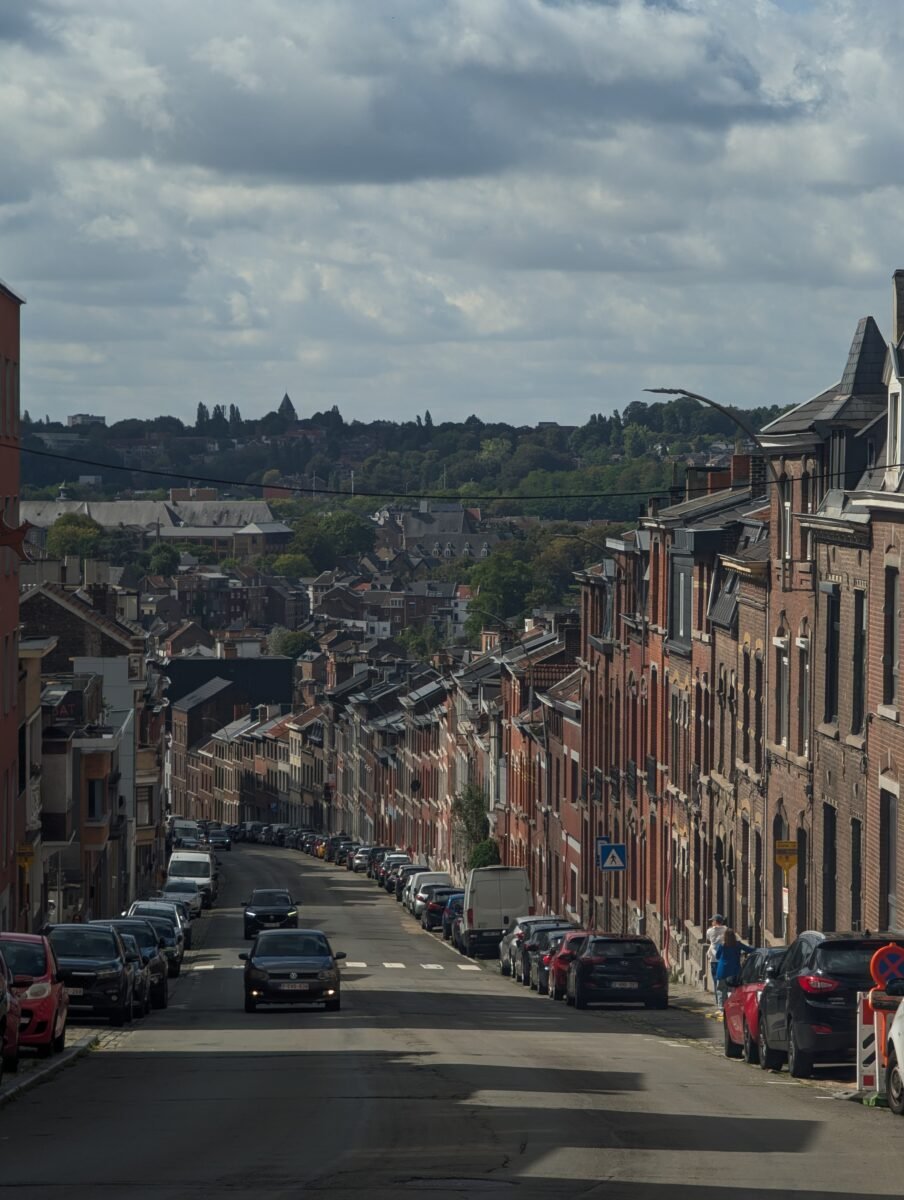
Liège is prominent in the region, a steelworks-and-coal-mine-of-a-city that grew prosperous through heavy industrialization. One could see this from above, in the grandiose nineteenth-century facades that industrial money paid for. Because there was money to be made here, once, lots of it. There were opportunities, and people flocked in from all over Europe, particularly from Italy, with a clear wish in mind, clear hopes. A clear brand as well, that got built around this identity, with tiny brick houses all close to one another, forming rues and boulevards for cars to pass by.
Years passed, and things have changed. Europe suffered two world wars, and Liège couldn’t escape either: the first big battle of the Great War was even fought in the city in 1914. It was bombed and suffered twofold, then rebuilt, and for what? In the end, coal lost its prominence, and steel and heavy industry moved away from the European continent. Liège had an identity, a brand; one it was supposed to stick by, one that it had built around proudly. By the 80s, though, it started fading away as the coal mines got shut. And by the 2010s, when competition in steel was unbeatable and Liège closed its large factories, that raison d’être de la ville was effectively “oufti!” – gone!
You can’t observe this kind of meaning search from above. I started my descent from the rosiness of my new-city honeymoon period – one that lasts far shorter after all those failed marriages I had with other cities before -, and things began to appear to me. After all, one may get the general idea of the city, admire its macro image from the centuries that sculpted it, but to get the gist of it, one has to put those boots on its merry ground.
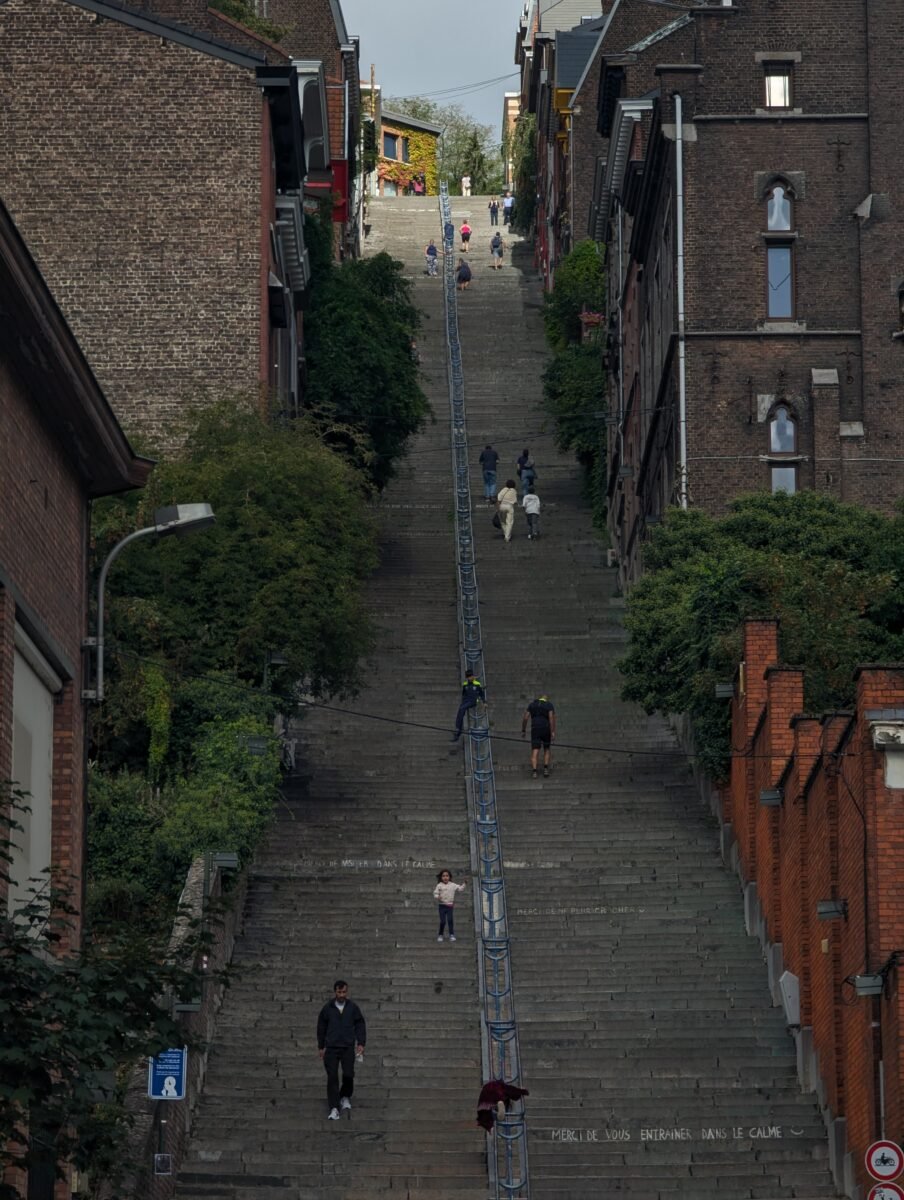
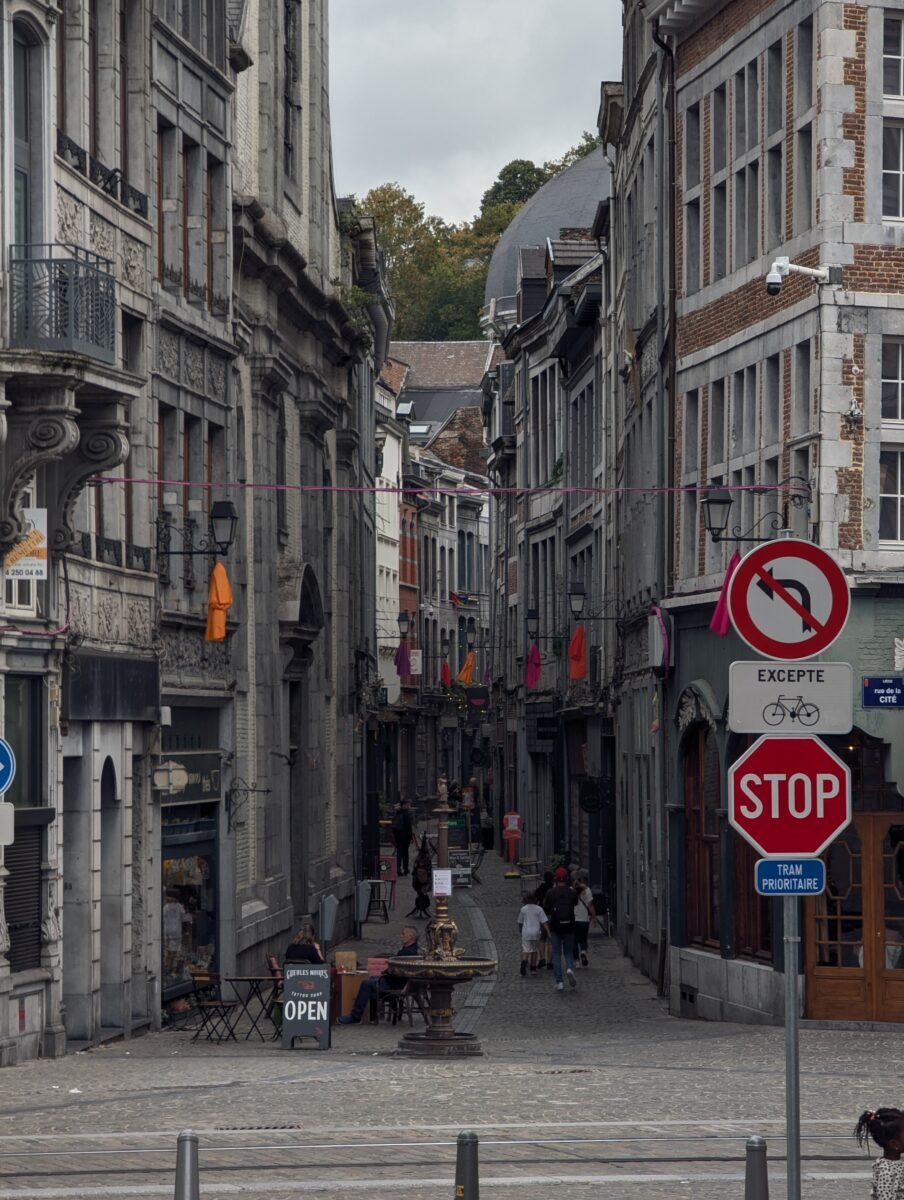
374 steps down from the Montagne de Bueren, passing by Place du Marché until reaching Opéra Royal de Wallonie, and then slipping into its narrow, dense streets of Le Carré, one can start to witness the city’s heartbeat, its real, current identity. This central neighborhood is the heart of socializing for Liège. And walking there feels, especially at night, unsafe, sketchy; yet somehow inviting in its mystery and dirty promises. All kinds of odd creatures – beggars, petty thieves, drug addicts, alcoholics, or, the worst of them all, mere drunkards of university students – can be found quarreling, flirting, and lovemaking, throwing fists and fainting, all in hours when “normal” citizens prefer sleeping.
The Drifter of a Man
Sometimes, I wish I could grab my e-reader and sit on the banks of the Meuse, lost in my digital pages and notes. It feels unsafe, though. I prefer the comfort of my home instead.
In those familiar walls, I felt secure in daydreaming, as I usually do. I seldomly returned to that vision of my younger self, as a way of digging up the past for answers about the future.
That teenager, even in his naivety and inexperience, in some respects, appeared luckier than me. If we were to face each other, I would dread his question, because I know my answer would not satisfy him.
“Did we become a marketer? Did we work in corporations, living abroad?”
“Yes, we did all these, and it didn’t work well for us.”
“And what now?”
What now? I don’t know. I wouldn’t dare meet his eyes, because I still have no answer to give them.
How poetic, to be here, a drifter of a man, in a drifter of a city.
But why are humans in search of meaning, anyway?
Tough question. One that has been asked again and again by all sorts of thinkers, affluent or miserable, practical and theoretical.
Lucky are those who find meaning already out there, prescribed. One in the form of a career, of a social standing, of a religion.
Plenty of thinkers thought the opposite; Camus considered it as (a philosophical) suicide, Nietzsche as a measure of keeping people in check, Sartre as bad faith, a remedy from the nausea of having to choose for ourselves. But if humans are merely creatures in search of their eudaimonia, as Aristotle put it, with his emphasis on living in accordance with reason and virtue towards oneself and others; and if that is where their happiness lies, so be it.
And even not, even if they do all these, but they feel happy nevertheless? So be it that they live in a cave watching shadows, and some smartasses said that’s not the way to be? If that’s the meaning they know of, and they’re happy? So be it!
I’ve watched “(500) Days of Summer” the other day – and yes, I move from philosophical thinkers to a romantic drama without any hesitation; watch me – a lovely movie as romances go, one that presents two flawed characters who got intertwined in seeking another type of meaning humans usually aim for: love. Spoiler alert: it doesn’t work out between them. But it works out for them in the end. They find the love they wanted. Summer becomes certain about a man and marries. Tom ends up quitting a job he knew, deep down, was not for him, and shoots his shot at becoming an architect: and, as a bonus, meets his new girl, audaciously named Autumn.
All jokes aside, I liked the movie. Considering I am not a fan of romantic films, I appreciate how they handled the characters. Neither Summer nor Tom is inherently good or bad. They are complex, messy characters with their emotions and imperfections, trying to navigate their world.
But isn’t this such bullshit?
That was last night, though, and the next morning, a Friday with nothing planned, I combated my fears and went to read outside anyway. I headed to the citadelle and finished the last pages of my then-read Down and Out in Paris and London, the debut work of famous author George Orwell. We all know him for Nineteen Eighty-Four and Animal Farm, but what was unknown to me until recently was his first-person experience with the theme of the book: poverty.
Ugly, unapologetic poverty. Of people who, at some point, had it right, then lost it all and never recovered, living in delusions of their past glories, or in pathetic acceptance of a low-life existence that, to our privileged, romanticized Western asses, can even sound exotic. No matter that this was the reality for millions of people in Europe, just merely decades ago. No matter that this is still the reality of hundreds of thousands of people in Europe, of hundreds of millions in the rest of the world.
No, for us, it will turn out just right. My star signs say so; I’ll manifest it. Others can’t because they are too miserable; they don’t believe enough; they aren’t us, after all.
Directionless in a Square
After that, there were many aimless walks within Le Carré, even on those previously feared banks of Outremeuse, contemplating my existence while observing others.
I was watching these poor, homeless souls wandering across the streets, recalling the lines of Orwell. I was looking at them in despair, unable to look away as they prepared their needles, watching them inject whatever happiness they could get from the vile substances that may kill them, as they very well could overdose hours later, just here and there. No one would know but the few who would find them, dead in the cold morning.
There would be no mourning for them. There would be but a vicious square of the same, for some other victim who’s next.
Spectacles video on Portugal’s Drug Addiction policies is far too relevant not to include in this article.
And I tried to be critical; I considered all the excuses I might find, or the ones I hear from others these days. All the waivers of responsibility: that it was a life they probably chose or brought upon themselves, that they do not wish to be helped, that there is a system that could support them yet they do not seek it out. But even when I tried to rationalize it that way, there was something inherently immoral. It just felt wrong; there was nothing more to say.
At least, for us, the privileged, there would be nothing to begin with. If a tree has fallen in the forest, after all, but there was no one there to hear it, did it truly fall in the first place?
No, we’re fine. If we have our meaning straight, we can rest assured it will keep on existing. And if we don’t, we can rest assured that it will find us.
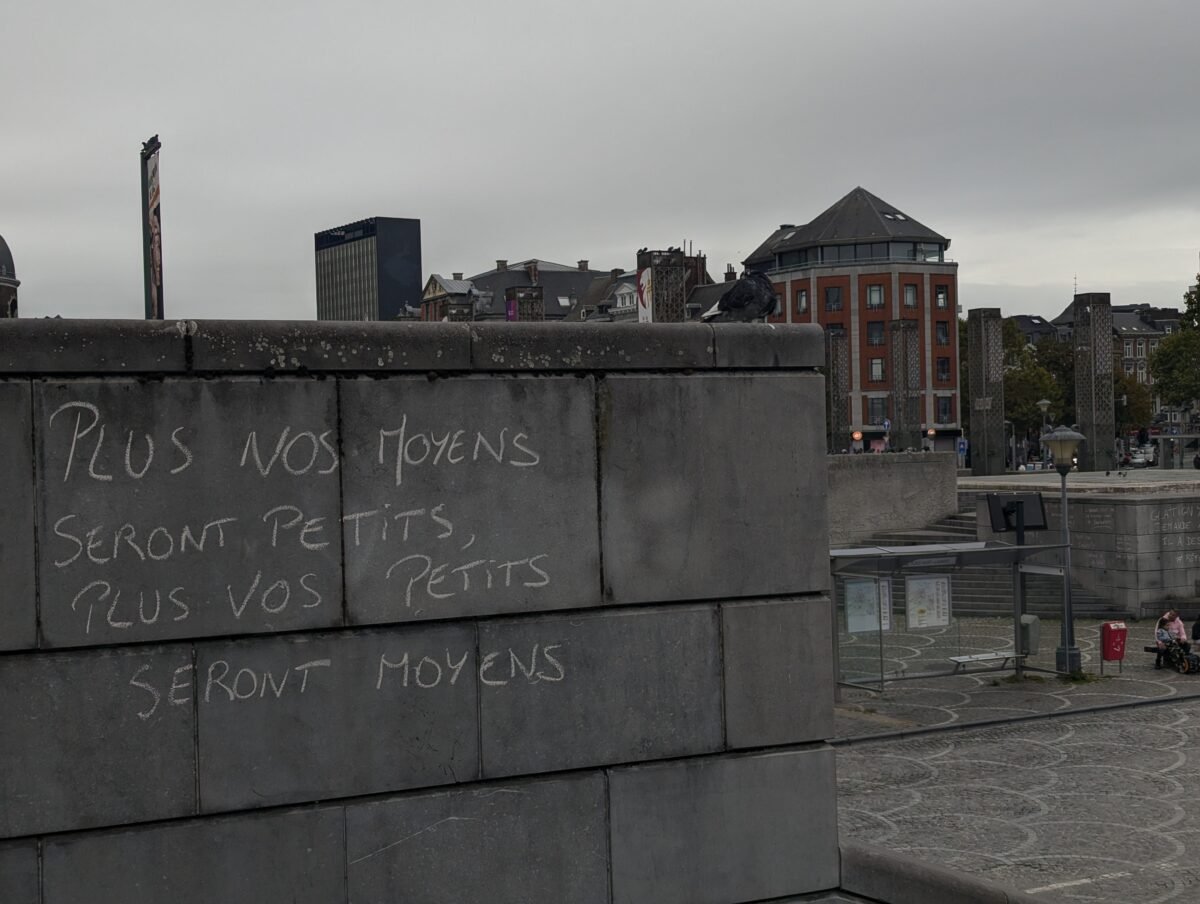
And as for Liège itself, who knows? It escapes our horizons, and after all, if we won’t make it here, we can always claim we came here as visitors. That luxury has been bestowed upon us, and us alone.
—
Greece will get its ending, no worries. I am just still working out what that ending is.
See you in October for the series next installment and, once again, thank you so much for reading!
Comments are closed.