This is a new series for my blog, reflecting on the constant changes I’ve been experiencing recently, travelling across Europe in part due to my Erasmus Mundus in Impact Entrepreneurship.
The blogs will combine two very incompatible lenses: a leisure, travelling, and at times literary vibe with images, tips & commentary, and a (philosophically influenced) sociopoliticoeconomic analysis with hard data, sources, and research. How successful will I be in marrying them? You can be the judge.
I will conduct it all with respect, pragmatism, and a (painful to me even, at times) impartiality; always covering both sides of the argument to the best of my ability.
As my dad always said to us all: wear your boots; we’re leaving. Join me for my trips and prepare, with me, to start Pondering across Europe!
Table of Contents
Introduction
Most would claim that Mt. Lycabettus is the best spot to gaze upon Athens, to wander, changing gazes from the Acropolis to Plaka, to the endless valley of anarchically built blocks of cement. I beg to differ. My spot is the Filopappou hill, and that is a hill I am willing to die for.
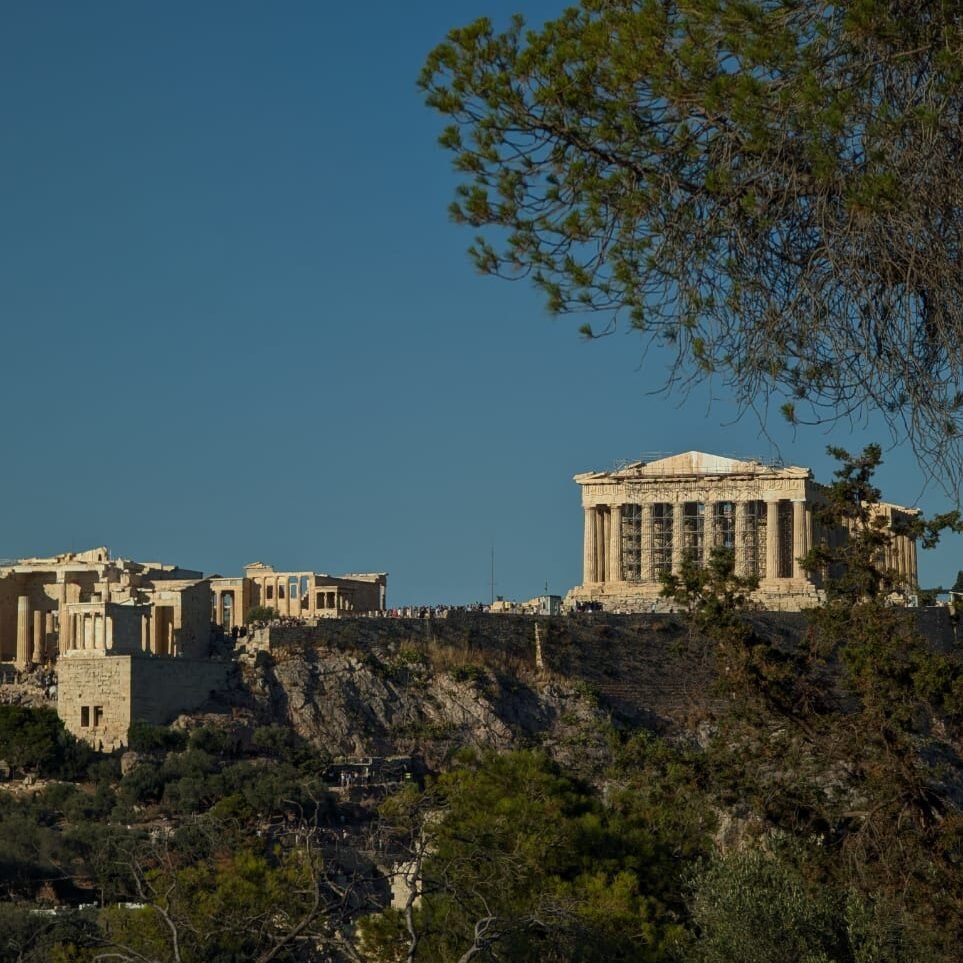
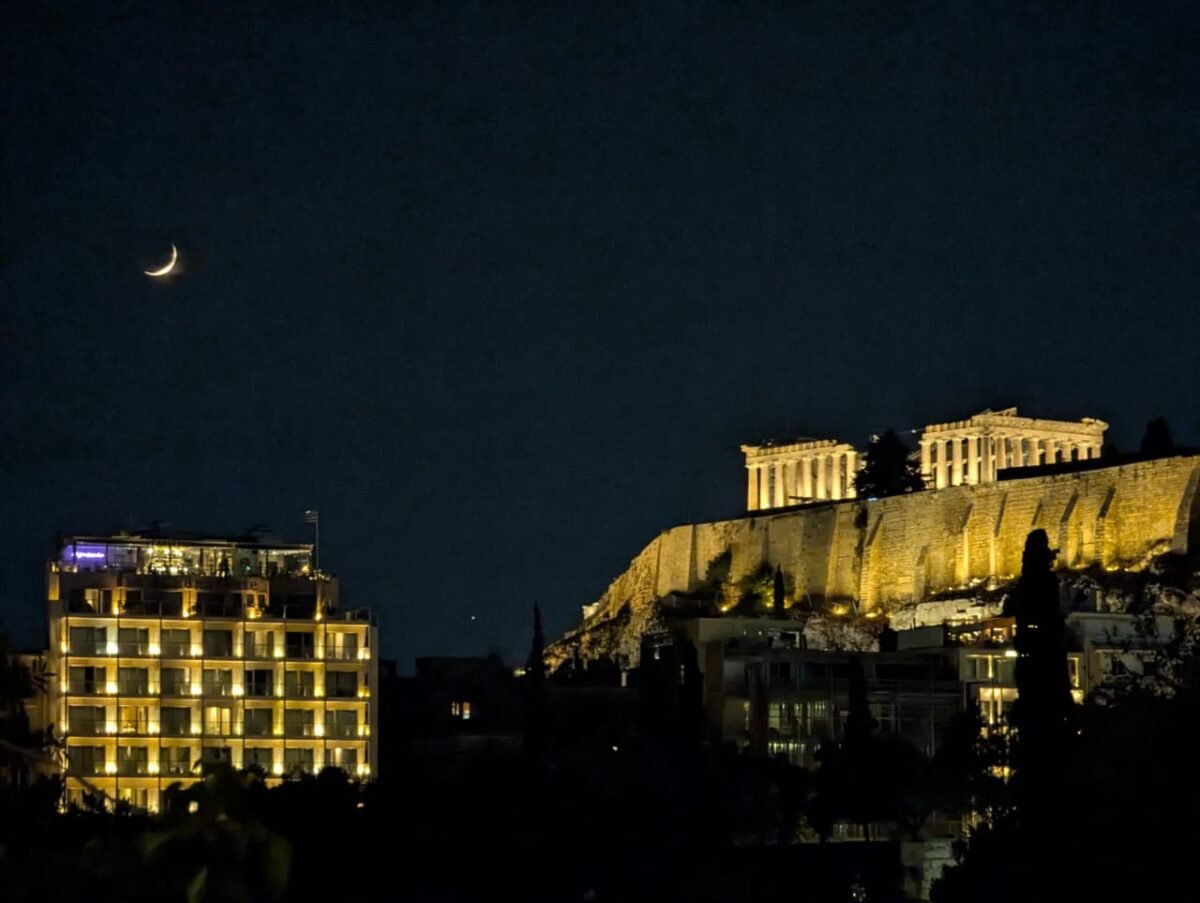
My reasoning is as clear as the Athenian sky, smog & pollution excluded. Albeit shorter than Lycabettus, the hill is right next to the Acropolis. The way uphill hosts symbols of another era, such as the prison cell of Socrates, where his followers begged him to escape: he chose death and the honor of his values instead. This visual proximity to the Greek capital’s renowned landmark, with all its marble spots and lithics, enables the visitor to ponder, with some imagination, all the country’s layers of history. All respecting its base that marked the beginning of its golden era, the Parthenon, which, still as of now, remains tall and proud.
I don’t live in Greece anymore; last year was spent between Croatia and Lithuania, due to my Erasmus Mundus master’s. Yet my semester in Vilnius has ended, and the time to return to my homeland after a full year’s absence came. I departed Vilnius with what I thought as sunny, but as soon as I landed back here in Athens, the sun hit me a bit too brightly, bringing back all the memories.
Hungry for more, I quickly rushed to take this view once more. My skin has bathed in sunlight, as always, overindulging, ending up burnt despite any futile sunscreen attempts. And I came up here to ponder once more about that glorious civilization of the old, with all its contemporary layers. To ponder from my favorite point of view. To ponder, also: what went wrong with my historical nation?
How’s Greece post-2008?
I quickly figured out that, while a few things have changed, things remain largely the same.
No matter what the foreign headlines may say, Greece is still in financial ruin, not unlike the one I’m gazing upon as I’ve been writing these lines. A constant decrease of the debt-to-GDP ratio, or a GDP growth rate that outperforms many other EU-27 economies, reads nice to everyone except those with knowledge of (even fundamental) economics. Greece manages to lower its ratio with a terrible sacrifice of the state budget, with an influx of the most unproductive of investments (real estate). And such headlines are possible, as numbers are horrible, but very effective liars. Flashy +3% growth compared to other developed economies loses its potency once one comprehends the whole historical view, with figures including pre-crisis GDPs. Or by understanding the fact that those compared developed economies are so well developed that it’s simply difficult to continue adding with such percentages, even if nominally the increases may still be bigger than Greece’s, or more productive, or more equally dispersed, or, well, I could keep going on, but I would bore you, wouldn’t I?
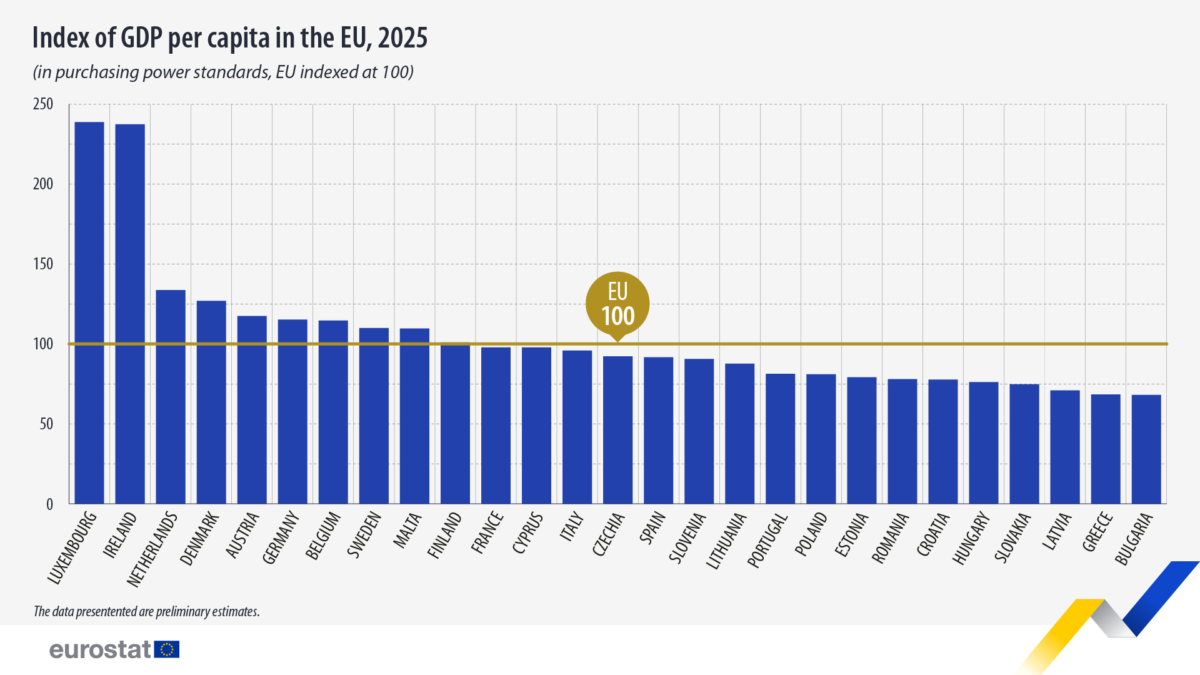
What matters from an ethical perspective is how the citizens of the respective country experience these abstract numerical increases. In the case of Greece, this remains not the case. Purchasing Power Parity (PPP) here is far more revealing. Nominally, Greece’s GDP is the 17th within the 27-country block, while things increase when accounting for per capita GDP, where Greece is 16th. However, in PPP terms, Greece ranks 26th, with Bulgaria being last (Eurostat, 2025a).
Why is this particular metric important? Because it cuts through inflation and currency distortions to reveal the actual, comparable standard of living for everyday people across different economies. This renders Greece as one of the poorest nations of the EU.
Even when giving the benefit of the doubt, Greeks are significantly worse off than they were before the economic crisis. Such counterarguments could, potentially, consider Greece’s shadow economy, which, as a term, refers to the chunk of a country’s GDP that is not fully accounted for by the state economy; through tax evasion, untaxed exchange of goods and services, etc. That figure is difficult to estimate; the IMF report offered the gargantuan 29.4% (IMF, 2021), while internal Greek sources suggest a figure standing at 20.9% (KEPE, 2025). Both figures are not fully recent, and due to the digitization of the economy, it is plausible that the percentage has decreased. This can even raise the question: is there real growth after all, or is this just a (at least partial) reintegration of the black economy back to the nominal economy?
With a nominal GDP of 307 billion (IMF, 2024), those percentages add up, with some of them trickling down to a Greek’s PPP, although many PPP estimates still account for shadow economies. The point remains. Greek citizens are poorer in 2024 than they were in 2004. For the record, there is only one other country in the EU with this hopeless distinction: Italy (Eurostat, 2025b). I guess, grazie mille for joining us on this, Mediterranean brothers.
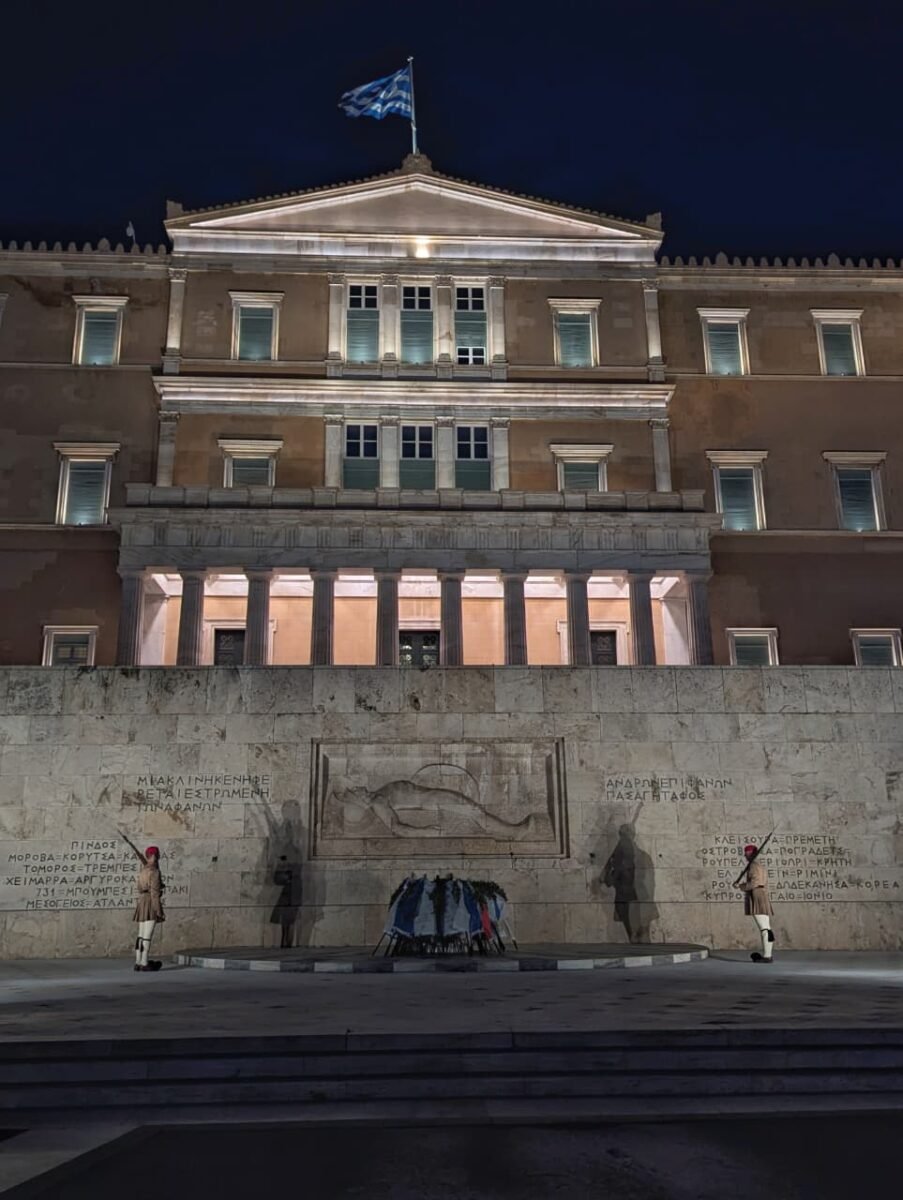
The Post-Crisis Greek Political Experimentations
Such a two-decade-long strife created political dynamics in Greece that were, probably, ahead of their time given the far-right rise major European economies experience at the moment. In that, we spiked on the extreme far-right first, with a neo-nazi party (Golden Dawn) being the third biggest political party in Greece in 2015 – a disgraceful mark in the nation’s history. In that same election, Greece also elected its first left-wing government, breaking the practically speaking two-party system of New Democracy & PASOK, voting for Alexis Tsipras’ SYRIZA party.
How did Alexis manage to pull this off? By capitalizing on populist rhetoric, tapping into the feelings and hopes of the Greek nation in an escape from austerity, without a clear plan on how to achieve it. The results? Disastrous negotiations with Greece’s lenders, reckless maneuvers that brought an economy to the complete breakdown of its banking system, and the subsequent conformity of a left-wing party to extreme fiscal austerity and right-wing politics, cutting from the welfare state.
Offering the benefit of the doubt to Syriza, I can imagine that there were idealistic intentions that, to their eyes, were to the benefit of the people, to which I am sympathetic. Additionally, at that moment of negotiations in 2015, the Eurozone was under the iron fist of the German Finance Minister, Wolfgang Schäuble, and the declining sharpness of German Chancellor Angela Merkel, both serving their internal, dissatisfied with Greece German electorate; Schäuble in particular went against economic theory in making an example of the Greek nation with fervor.
I won’t even hide that, as a thinker, I am fond of Yanis Varoufakis’ (our Finance Minister at the time) notions; Technofeudalism as a concept is entertaining, arguably fitting the reality we experience far better than traditional capitalistic models. Still, while Yanis’ knowledge in Economics & Philosophy is undeniable, the practical results showed him to be a terrible negotiator, falling apart and alienating the Greek side from any chance of a positive deal. The notions of SYRIZA ended up too unrealistic and eventually hazardous for the Greek Economy and brand, a hit that took some extra years of recovery.
In policy, SYRIZA had some successes in its left-wing ideology. Particularly, laws were passed during its tenure that ensured at least partial health insurance to all Greek citizens, second-generation migrants were (hesitantly) started to get citizenship, and same-sex marriage was granted to an extent – all highly costly and difficult-to-pass measures in a traditionally leaning society that is Greece. However, history is just; pragmatically speaking, it shows us that, even if they had the best intentions, their tenure was a failed experiment that ended up prolonging, not helping, the suffering of the Greeks.

What followed, of course, wasn’t any better. As the citizens were appalled by their flirtations with extremes, they pulled up a classic: they called their ex back to ask for forgiveness. Golden Dawn was (thankfully) outlawed, SYRIZA fell into obscurity, and Greeks went back to New Democracy. Kyriakos Mitsotakis, the son of a previous Prime Minister, Konstantinos Mitsotakis, promised competence and economic improvements, better foreign relations than the preceding SYRIZA, but most importantly, familiarity & stability.
New Democracy has been in power since, to this day, winning the last two election cycles. So, how are they faring?
The Current Status Quo of New Democracy
The same benefit of the doubt I wish to extend to New Democracy. During the last almost seven years of ND rule, Greece has arguably seen some much-needed reforms, successes, and progress. I will list some of them below:
- Led by the minister of digitalization at the time, Kyriakos Pierrakakis, a digital system was introduced. While not perfect, it vastly improved the efficiency of Greece’s bureaucratic system.
- The same person, now Greece’s Finance Minister, became the Eurozone’s current leader. Even if this arguably and partially may have happened because the planets have perfectly aligned for it (at the time of the election, his main opposition was the Belgian FM, who happened to go against the EU over the matter of utilizing frozen Russian Funds to support Ukraine), it remains an unthinkable feat from ten years ago, when Schäuble led that same group.
- Greece has enjoyed, with occasional hiccups that are unavoidable, positive foreign relations. Both Nikos Dendias & Giorgos Gerapetritis are technocrats with an established, tested, and moderate diplomatic profile, recovering the outlook of the country to the EU and the world. To that extent, there were even some years (2023-2025) of calm relations with Turkey, although this has begun to change in the last few months as relations worsen.
- Nikos Dendias, after its tenure as Greece’s Foreign Minister, to my eyes became the best Defence Minister the nation has seen in recent decades. He oversaw huge upgrades in Greece’s military capabilities, and undertook very unpopular, but highly necessary modernizations of Greece’s army: closing obsolete military camps, attempting to promote a meritocratic profile to a heavily nepotistic institution, even allowed women volunteers to join the army for the first time in nation’s history.
- Greece pursued, to some extent, progressive policies on the green transition, in legalizing LGBT+ rights, etc., not necessarily aligning with traditional right-wing parties.
- And, on paper, the country runs successive fiscal surpluses, enjoys better financial rankings and better trust in the financial markets to some extent, with constant reductions of Greece’s debt, both nominally and in relation to GDP.
But, of course, New Democracy is far from successful, nor universally popular. One could argue that it might, on paper, in theory, based on their criteria, etc, that they have been more successful than previous administrations; but New Democracy is not an overall successful party. Or maybe it could be, for the elites, for foreign investors, arguably even for older generations, that, unable to change, still seem very willing to vote for New Democracy.
But for Greece as a whole? Corruption is evergreen, such as the OPEKEPE embezzlement of EU agricultural funds or Greece’s own Watergate. Human rights are occasionally discarded, as there is much mistreatment of in-camp refugees, as well as preventable deaths of people passing through the Aegean. Prices are constantly rising, with groceries being more expensive than in many other European countries; the Greek education system is constantly underperforming; there’s repeated deinvestment and simultaneous overwork on the public health system. And the one tragedy that overflowed the cup of patience: the criminal absence of proper planning and protocols led to the Tempi Train Disaster, leading to the loss of 57 lives.
And, while economic metrics seem to improve, this improvement fails to trickle down to the people. Turns out that investments like real estate, driven by affluent Greeks or foreigners, don’t necessarily or immediately translate into a fairer, better-distributed economy, making the poor poorer, the rich richer, and the middle class… poorer and less important.
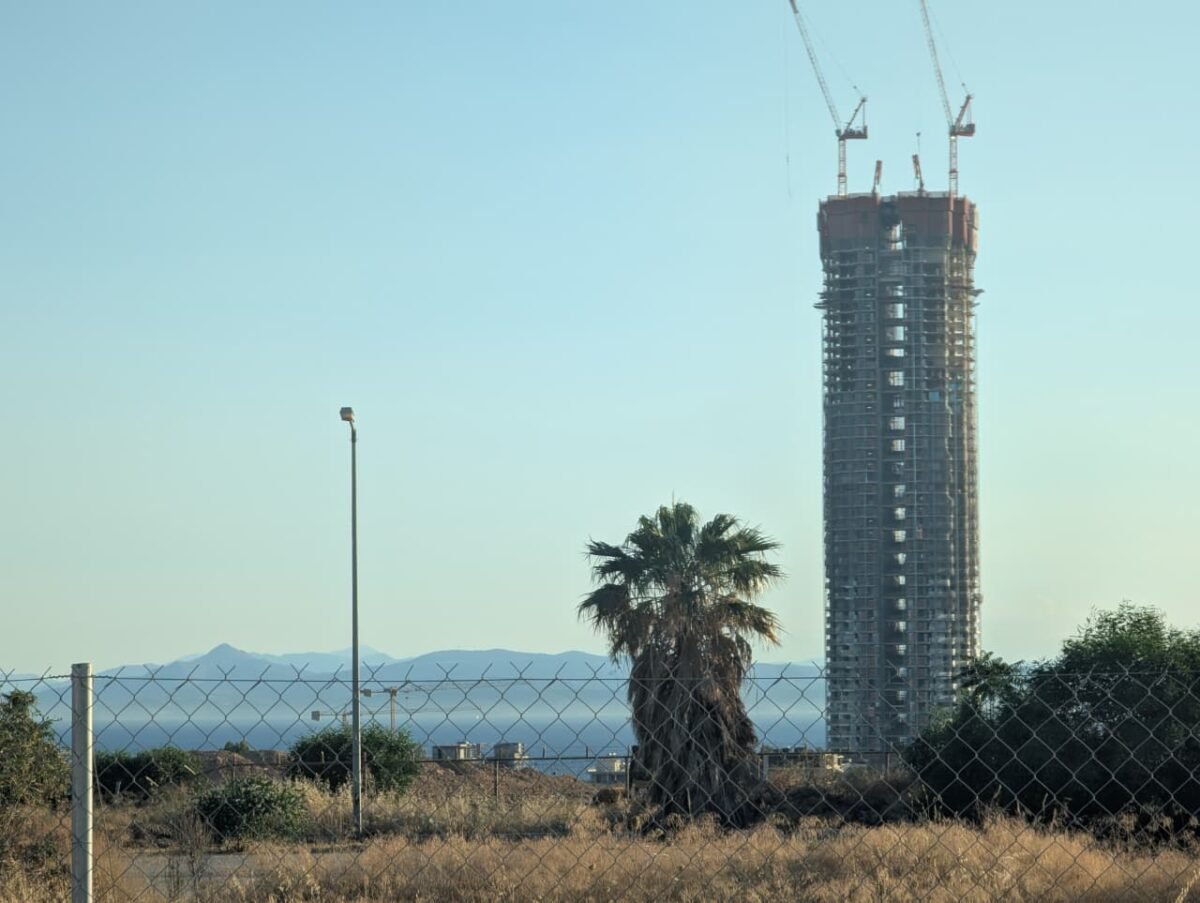
I find the Ellinikon Tower & Project to be the best metaphor for New Democracy’s reign over the last years in power.
A flashy real estate project redefining success within Greece, yet only for the few who can afford it. Towering over all, an uncharacteristically tall tower that blasphemes the skyline of the city, that in its anarchy was still bowing, was still paying respect to the Parthenon, never striving to surpass its height.
To succeed in both capturing the electorate and enforcing stability, the party itself is far from coherent and uniform. Sadly, one-tenth of Greek voters who chose Golden Dawn didn’t cease to exist, or change their minds about that neo-nazi’s horrors; they just chose New Democracy (or other populist far-right parties with no real agenda, such as Velopoulos’ Greek Solution). New Democracy is an umbrella party, featuring anyone from centrists to far right, from technocrats to populists, from very progressive to ultraorthodox & traditional.
In my original draft, I included a name for one of the sides, as there is one person in one of the sides who covers both three, but in fear of getting sued, I would rather not.
Greek Political Future? Up For Grabs
Cracks begin to show in the party’s polished, undefeated surface, and what seemed imminent – a third, successive term of ND – now is not entirely certain. Popular, traditional members of New Democracy, such as the previous leader and Prime Minister, Antonis Samaras, with the quiet support of another previous Prime Minister, Konstantinos Karamanlis, broke away from New Democracy, announcing their plans for a new political party to challenge Kyriakos Mitsotakis ‘ so-called “party-enforced hegemony”.
Other fronts emerged as well. Our left-wing-centrist-on-paper, Alexis Tsipras, returned to politics with his new party, called ΕΛΑΣ. A note here to non-Greeks is that, while the party promises to be center-left, the name is not so; it blatantly refers to Greece’s communist partisan forces that resisted the Nazis occupation during WW2, then participated in the bloody civil war that followed after Greece’s liberation. Additionally, the mother of one of the 57 victims from the Tempi Train disaster, after years of activism against the current government’s alleged cover-ups on the incidents, launched her own party, named Hope for Democracy, creating an anti-corruption platform with, however, no thorough plan on how to achieve it.
Therefore, all of a sudden, there are numerous challengers to the regime. While currently ND still tops the polls, and the Greek electorate has been historically conservative, practically only electing three political parties in their post-1974 democratic life, changes can happen. If more scandals appear, or if ND fails to convert its fiscal space into policies that actually give people some breathing room, a change can happen.
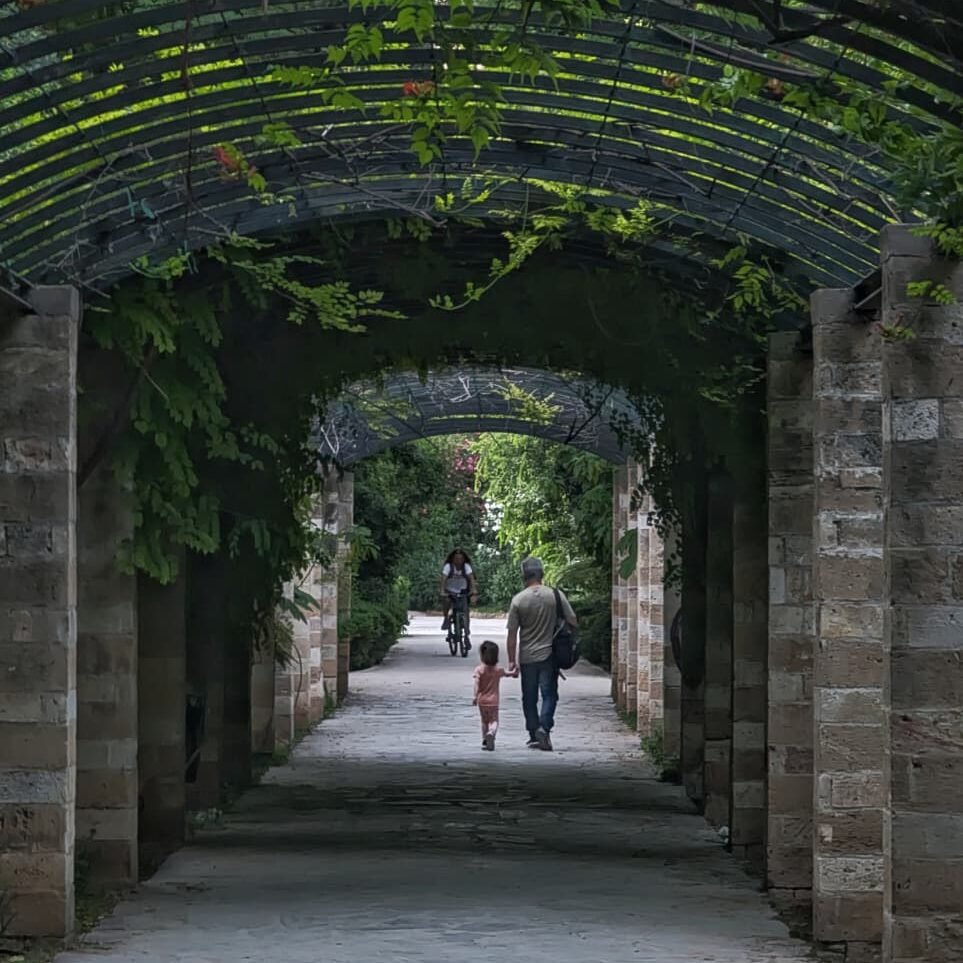
A change, towards what?
An Athenian (Real) Interlude on Trust
In this stage of my writing, alternating looks between the Parthenon, sources, and my psyche, a stranger who was sitting next to me talked to me. His name was Daniel, from France, and we started discussing the views, Athens, Greece vs. France, our life plans, and what brought us here. He was working on personal, long-term finance plans, a topic very relevant to both of our countries. Greek and French pension systems are dysfunctional, as the way they work (ie, young workers pay older pensioners, with no actual investment of that money, such as with the Norwegian fund) is broken due to demographics. Under such increased pressure, trust in an adequate, timely pension scheme becomes less likely with each passing year. We quickly figured out that, at the same time, trust in the institutions, both in France & Greece, was in general at all-time lows.
He left, and after a bit more writing, I got up from that spot soon and started walking, headphones off, listening to other people’s conversations. Be it out of curiosity? Of nostalgia, from finally returning to my home country after being absent for so long? Of secret bliss of being able to understand the language spoken around me? What matters is what I heard, which quickly brought me back to Greece, mentally.
I was surrounded by conversations from parents who overparent their children; jealous partners who unload their insecurities on their significant other; workers who cursed about their boss; and bosses who belittled their employees.
At that moment, I stood there, considering my own upbringing in these lands, and came to the conclusion that Greece is one of the least trusting societies on our planet. So I sat down at a cafe to refresh myself with a freddo espresso but, most importantly, satisfy my inherent curiosity about my hypothesis.
The exact figure from one of the leading studies on the subject, the Integrated Values Survey from the European Values Study? 8%.
8% of respondents said that “most people can be trusted in Greece (IVS, 2024). Less than 1 out of 10 people get out of their homes each passing day, giving their fellow countrymen a constant, restless side eye. The lowest in the EU, but not the lowest within Europe and in the world; as neighboring Albania, with its own tough history, holds that sorrowful thorny crown.
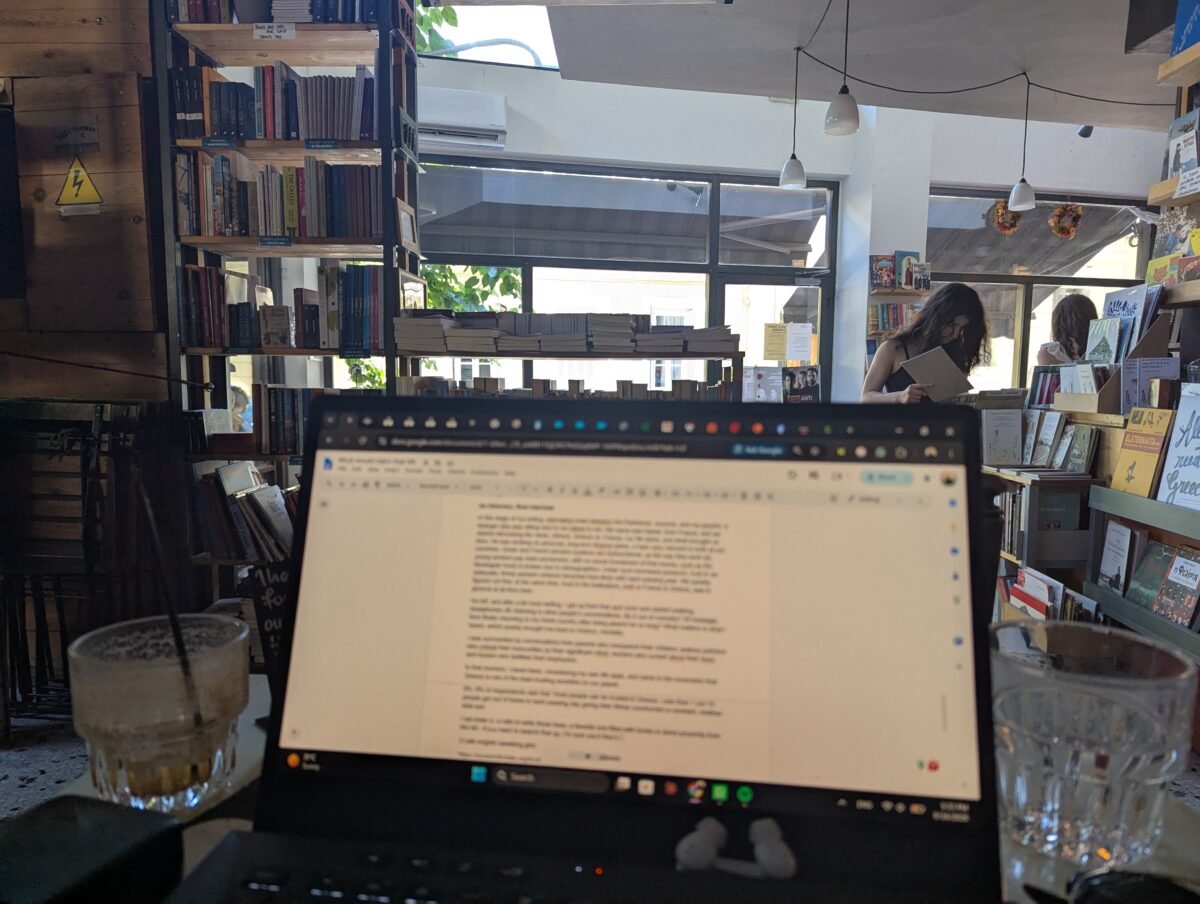
The exact moment I wrote that, my train of thought was interrupted by a quote from the table right next door, in crisp, American English:
“Greeks are weird, man”.
I couldn’t help but give them a weird, curious eye myself, as that matched so well with the vibe of my paragraph. We just looked at each other, and Fay, one of the girls, just called me out to her group for giving her the look, sharing a laugh and then a short conversation.
They were from the US, staying in Greece for various summer schools. They said that they love it here; there’s a real sense of community here, Greeks seeming to be less prudent than the people back in the US. And, to my surprise, that we are even more honest than people back in the US, which in comparison might be true.
They quickly went to the merry way, but I kept wondering about everything they told me:
Yes, that’s true that we are really not trusting as people. Yes, we indeed form strong bonds of community with each other, especially when abroad, when we most feel proud of our heritage.
It’s the ultimate paradox; Greeks both seem (and absolutely are) open, hospitable, kind to a great extent, yet, at the same time, so, so distrustful.
How?
To answer what is brought forth, one has to have the courage to take a step back. To the encyclopedia of human thought and existence: history.
One that is to be uncovered soon, on the next blog post for Pondering Across Europe, from my own hometown.
A historical city that’s overlooked, a city that has nothing to do with ancient Greece, but is actually the best example of everything that came after.
Also, one of the best, yet still hidden, gastronomical destinations in Greece.
See you soon for the second blog post, in Thessaloniki.
Works Cited
Eurostat. “EU Household Real Income per Capita up 22% since 2004.” @EU_Eurostat, Eurostat, 25 Nov. 2025, ec.europa.eu/eurostat/web/products-eurostat-news/w/ddn-20251125-2.
Eurostat. “PPPs for GDP per Capita in 2025: Preliminary Estimates.” @EU_Eurostat, Eurostat, 25 Mar. 2026, ec.europa.eu/eurostat/web/products-eurostat-news/w/ddn-20260325-1.
“Integrated Values Surveys (IVS) 1981-2022.” European Values Study, 5 July 2021, europeanvaluesstudy.eu/surveys/integrated-values-surveys/. Accessed 29 June 2026.
International Monetary Fund. “https://www.imf.org/External/Datamapper/Profile/GRC.” Www.imf.org, 2024, www.imf.org/external/datamapper/profile/GRC.
Stratopoulou, Artemis. “Digital Reforms and Tax Evasion in Greece.” Greek Economic Outlook, no. 58, KEPE, 2025, pp. 60–67, www.kepe.gr/wp-content/uploads/2025/12/4.2.pdf.
The Global Informal Workforce Priorities for Inclusive Growth. International Monetary Fund, 2021.
Comments are closed.