Hallo (German for “hello”)!
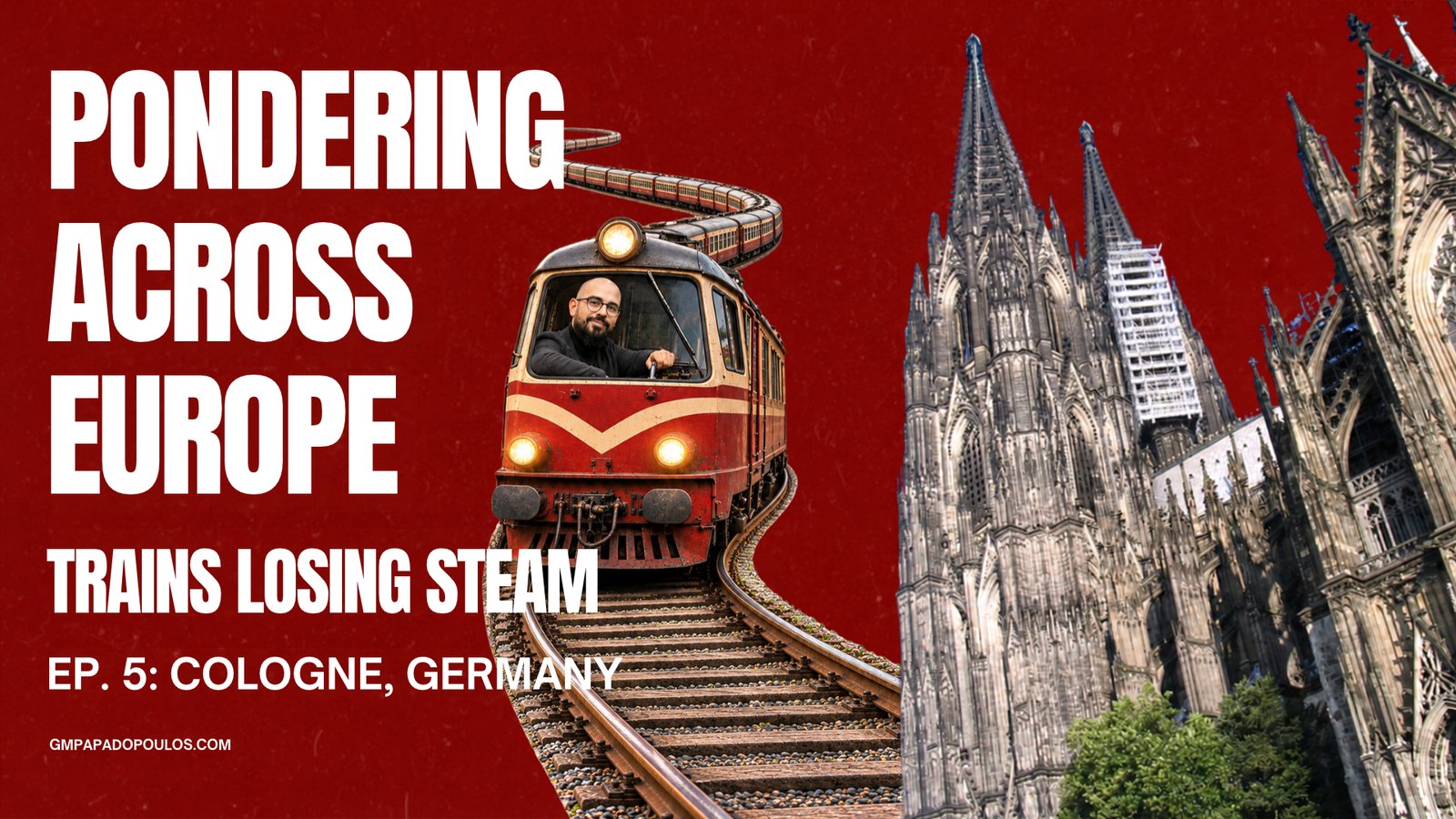
This is the fifth installment of Pondering Across Europe.
We take another detour from Greece as the series crosses into Germany for a weekend in Cologne. Why Cologne? Well, a fake Oktoberfest, a cathedral six centuries in the making, and the German spirit, but enough spoilers!
Wear your boots, and this time, don’t wait for the button to turn green, because if there’s no car on the street, jaywalk the crossroad. Los geht’s!
Table of Contents
Next Stop: The One After
Our bus from Liège dropped a few of us, classmates from my master’s, at Cologne Bonn Airport, and from that point on, life became a blur.
Mechanically, I got off and went looking for a train to Leverkusen. My phone said there was no direct connection. I didn’t bother much. I found one going to Köln Messe/Deutz, and from there RB 48 would take me to Leverkusen-Manfort. Precisely.
When my station was announced over the speakers, I got up and stood facing the closed door. The train slowed, then came to a halt. Obedient, patient, I waited for the button to light up green, the sign that it could be pressed.
But it never did. The other passengers noticed faster than I did and rushed to the next door. Only then did I wake up.
I rushed too, but squeezing down the crowded aisle and bumping into passengers, I lost precious time. The gate shut me in with no means of escape, no matter my anxious, constant pressing. Then the train moved again, slowly at first, then with speed, and I left my station behind. There were no reactions from my passersby. Their lives were a blur.
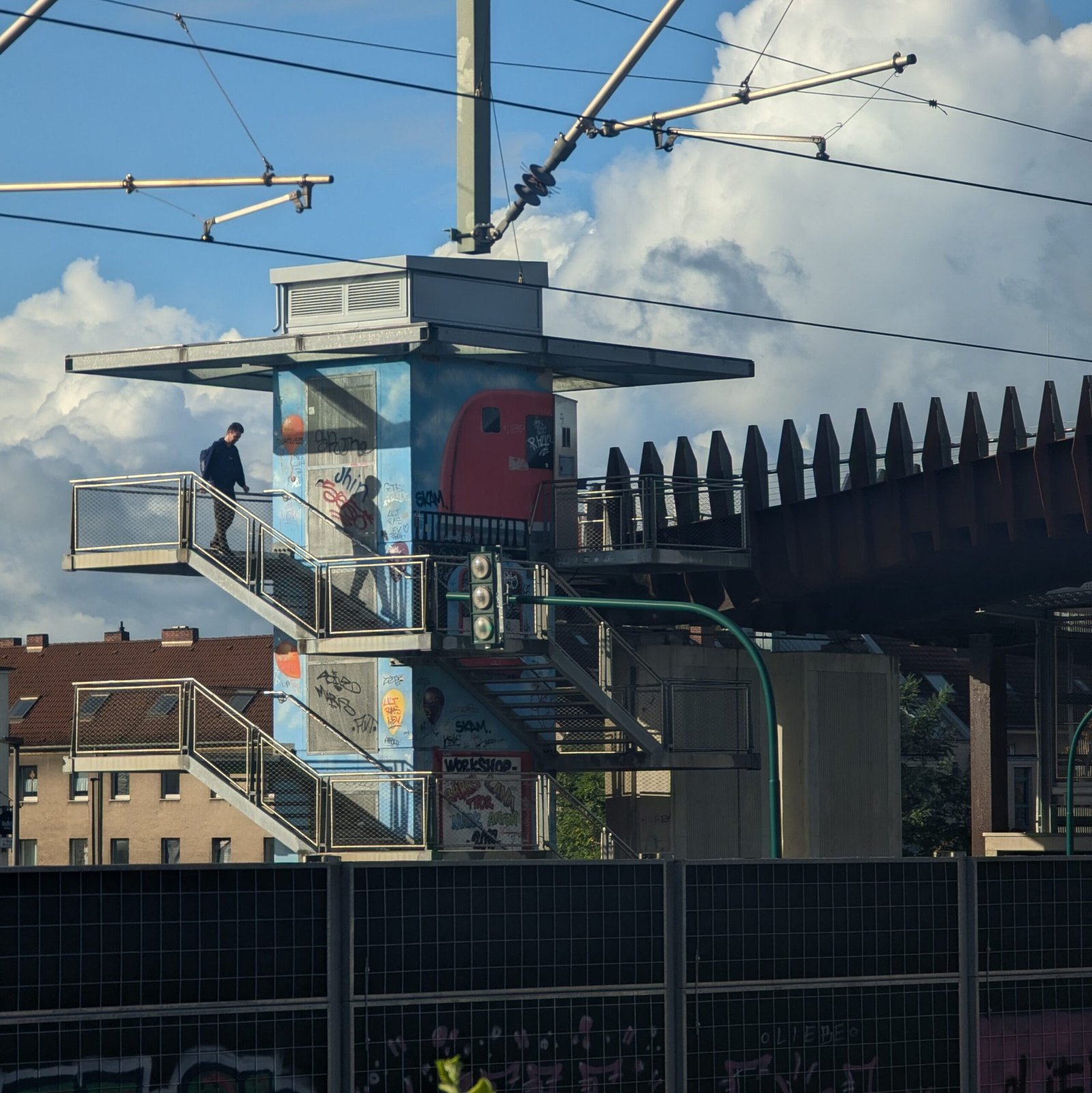
I got off at Leverkusen Opladen Bf, the exact next stop; my weekend in Köln officially began.
In the Heart of the Rhineland
The land of the Rhine, to my Greek eyes, looks like one conglomerate of cities combined, yet Germans residing there don’t feel the same. They support rival football teams with passion, drink at different breweries, and swear by their own Bäckereien. Köln and Düsseldorf in particular share a heated rivalry (yes, I know which TV series you’re thinking of; behave). Yet the rest of Germany, and plenty of people abroad, would say they share more than a river and a heavy industrial past. Rhinelanders are known as the least stereotypically German of Germans, cheerful and friendly to a degree that is unusual for these lands.
Koln, or Cologne, as we name it in English, is indeed sharing a common root with the fragrance you wish more people wore on public transport. Raised to colony status by the Romans in the 1st century AD to honor Nero’s mom, Agrippina (Colonia Claudia Ara Agrippinensium), it slowly faded to the uninspired Colonia, giving way to its modern versions. But because someone indeed created a citrus-based fragrance there, called “Eau de Cologne”, there is also a connection between the word cologne and colony. Did I mention that its inventor was an Italian living in the Holy Roman Empire’s Cologne, although it was a Free Imperial City within the empire, and decided to name his invention in French, even though they spoke German there? Yeah, we’re in the heart of Europe, where everything is just, well, interconnected.
Because it passed through so many hands, from the Romans to the Franks, to Archbishops and the Holy Roman Empire (and yes, it was neither Holy nor Roman, and as Voltaire thought of it, it was not even an Empire) to century-long free reigns that prohibited their archbishops from residing within their free doors, from Napoleonic ideas and influence to annexation, and finally, to slowly where we are now: the Prussian kingdom, the German Empire, the World Wars, and the final inclusion in modern Germany. A journey by itself takes time and leaves an impact, but what has this impact even become?
In Constant Movement, in Constant Lack of Time
Koln’s a fun city, one that I will definitely visit again. Having family close there makes it easier, thankfully: my cousin, Fotini, who patiently waited for me in the train station, despite my time-losing blunder, took me and hosted me in her 5th-floor apartment, overlooking Leverkusen’s structures. But time lost was not to be recovered, and time here seemed to run faster, much faster. I only managed a shower, yet no much-appreciated-and-needed rest, rushing out to our destination: Cologne’s Oktoberfest.
Now, Oktoberfest is not endemic in the Rhineland; it’s a Bavarian theme, with its primary expressor being Munich, hundreds of kilometers away. Still, people everywhere need to have fun, my classmates and I included. We were to meet at the Tanzbrunnen, an open-air venue on the Rhine, and see it for ourselves.
We left the apartment to catch the bus, then catch the train. Both of them we missed, so we waited, discussing our lives’ latest developments, observing passersby. Even once we were on board, the train stopped mid-route, adding to our delay. Things seem to work so well, until you’re inside them, until you need them to. Yet no one complained, except one man in front of us. It seemed so peculiar, so extraordinary, that I looked at him more closely to understand this phenomenon. It then made sense; he was cursing in English.
By the time we reached the venue, the Germans had beaten us; it was fully packed. Even in fun, they were, somehow, on time.
The Designated Time to Unwind
Huge steins of beer floated around freely, cheeks were turning rosy, and the crowd, still seated, seemed ready to go wild. It would take a couple of notes to inspire them, a match to light the fire. The band arrived and assumed their positions.
We couldn’t sit right next to our friends, but the neighboring table gave us some space to squeeze in. Everyone sang along in German, arms linked over each other’s shoulders, schunkeln, swaying arm in arm to the music. A well-oiled machine. They were alive. We were observing, still observing, until we heard the one thing that would light that fire in us too, the banger we would also, us foreigners, know to appreciate: Nena’s ‘99 Luftballons.
We never sat down for more than a few minutes after that. We spent the night drinking and dancing, letting ourselves go.
Until that song put us in the mood, I had been furious with myself for forgetting my analog camera in my packing rush. I forgave myself soon after. Some things belong in memory, away from the pixels, and maybe even the words, that imprison them in time. Their sweetness lies in their uncertainty, in their uniqueness, unshared with others, shared with only those who were there to play a part in them, to witness them firsthand.
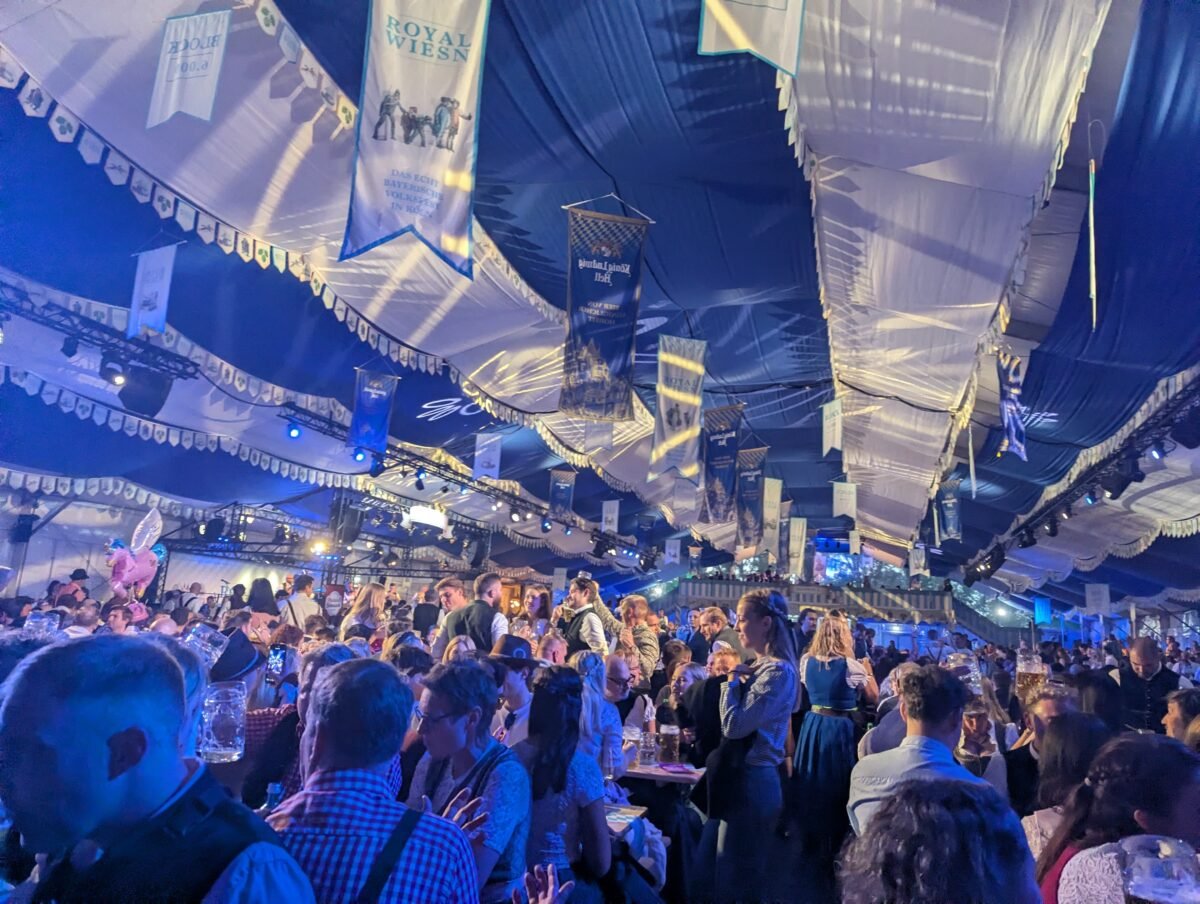
Life just became a blur, albeit a more cheerful one, this time.
Cinderellaed En Masse
The music stopped at 22:00, at the perfect time to de-hibernate and head for the train stations. The others planned to return to Liège that night, on the midnight bus from the airport. Fotini and I were to seek refuge in Leverkusen. But none had the appetite to finish just yet; no, we had got to fulfill the night as German certified, by eating a real, authentic, Turkish döner kebab.
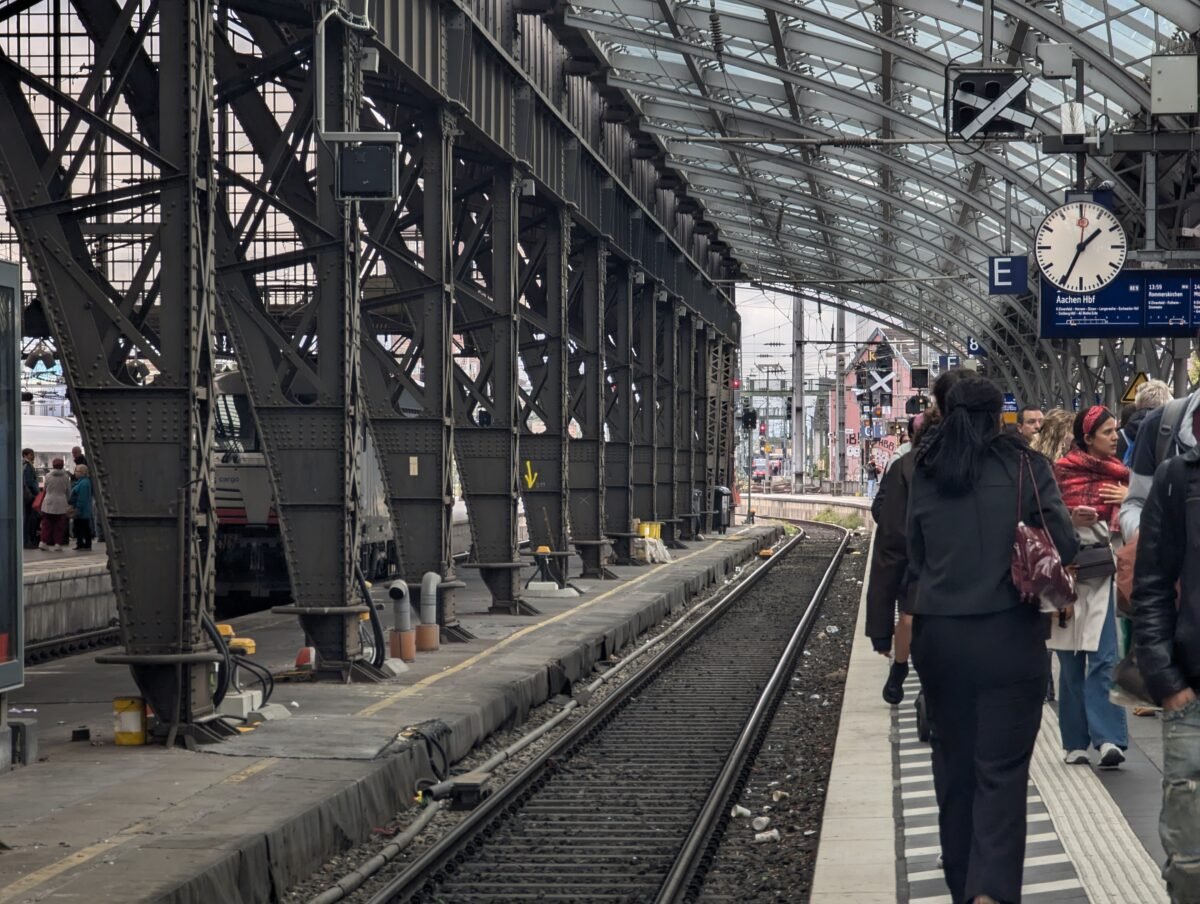
We devoured our wraps, some in silence and others in giggles, thanked our exquisite chefs, and headed to the station, where we left our friends on their platform and searched for our own. Our luck followed us. The train we expected was delayed, but we didn’t mind. I let my gaze wander in the absence of purpose, and it fell to the platform in front of us. A pier full of people.
- Where are they going?
- Home, like us.
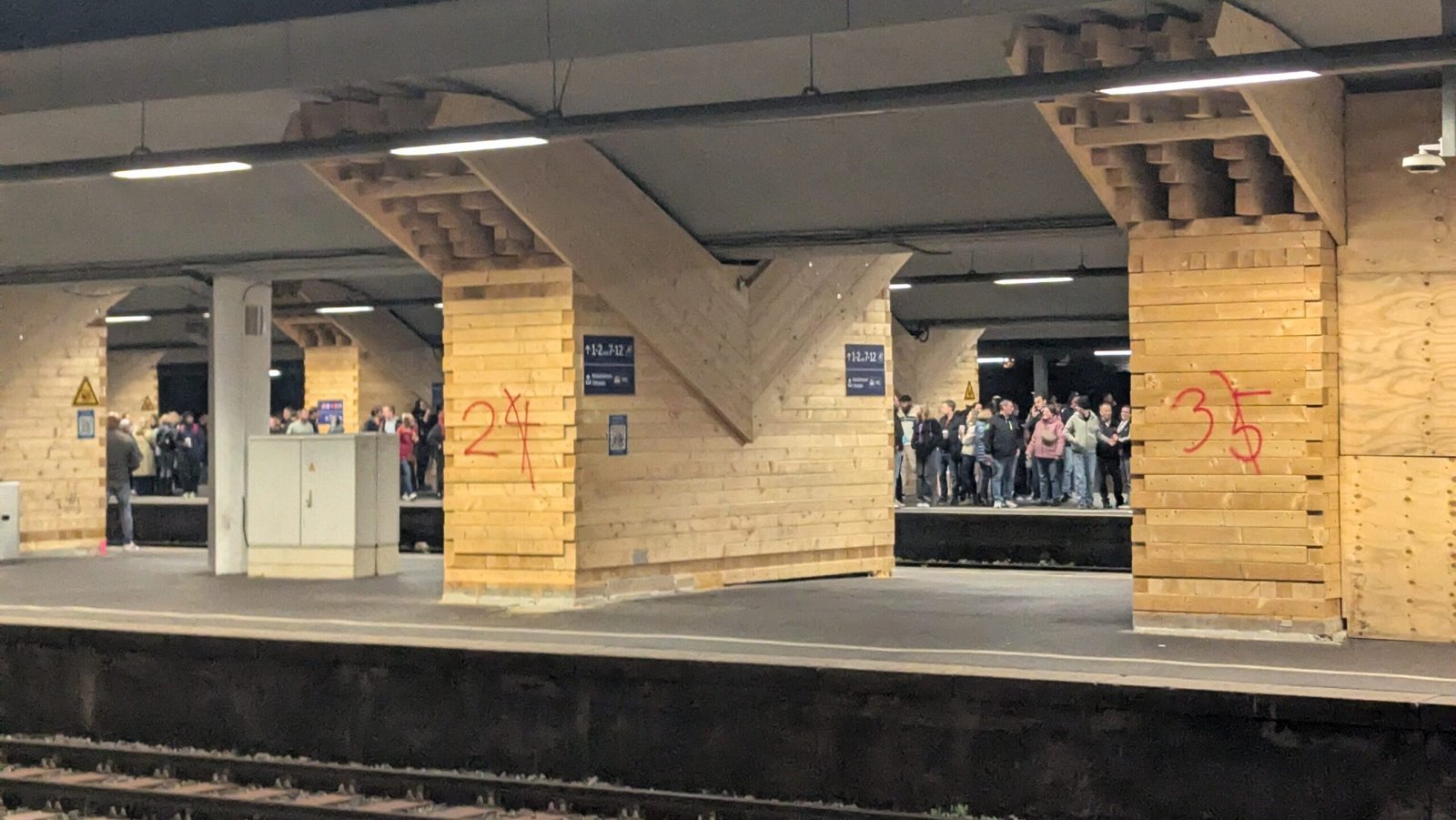
We were already on the train when my phone rang.
- Hello?
- Hey! So… we kind of missed our stop. And now the train is heading away; not sure where. We won’t be making it to the airport…
By the time they had worked out a plan, we were back at Fotini’s place. There were disagreements within the group, and a schism appeared; some wished to call it a night, while others wanted to go all in and club until morning came. We took in one of them, Sara. Two went to sleep at the airport, and the other three attempted to look for a club.
For the record, it was an attempt, as it proved unsuccessful; the club was hella expensive to get into, and that killed the mood. Still, all of us had broken the curse. We broke the rules altogether.
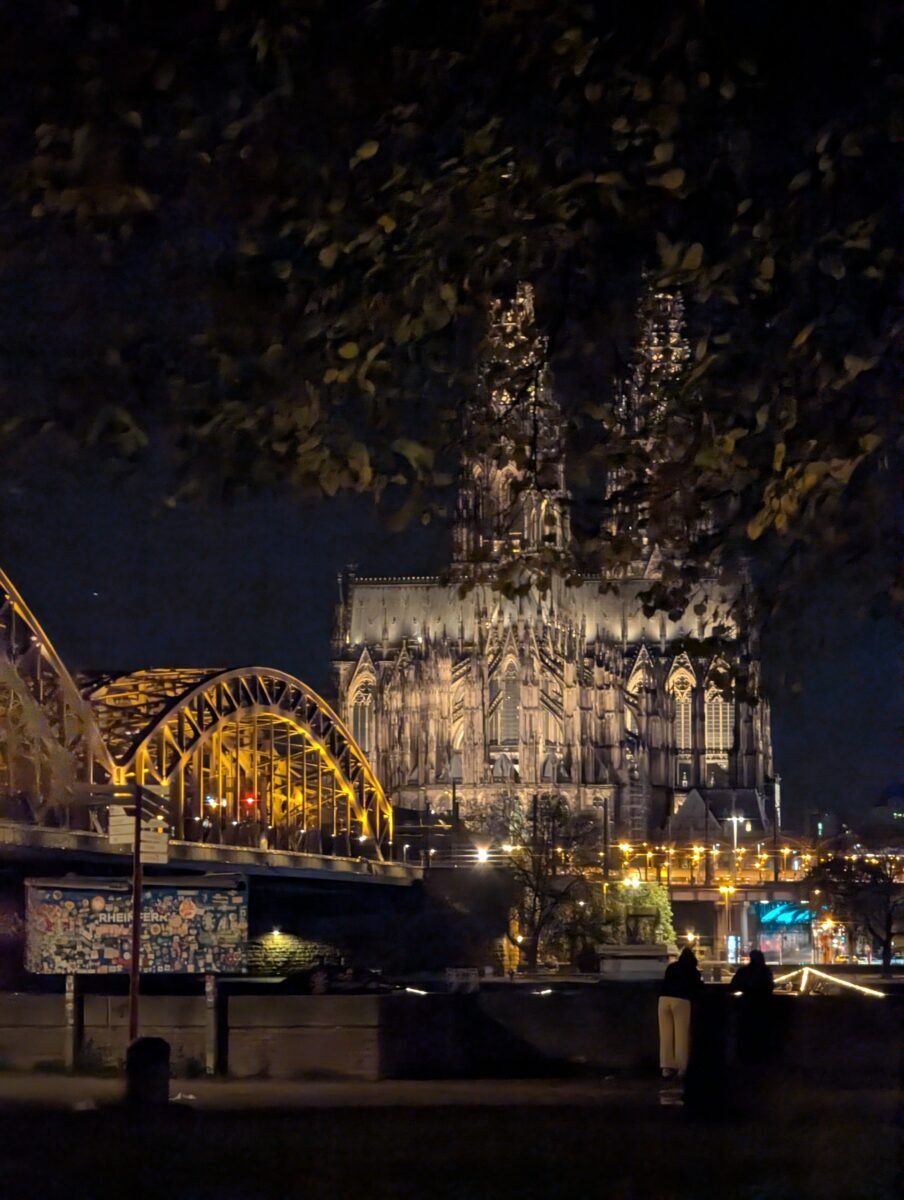
Midnight had come and gone, and Saturday was no more. But we were all still out there and kicking. I was heading back out to pick up Sara; the two party poopers were safe and warm at the airport, and the adventurous trio was in an Uber on its way to join them and finally get some sleep. All of us were alive; alive in our imperfections and silly decisions, alive in our actions to correct them, to make them work.
Our Sunday Service
The three of us in Leverkusen woke up late, around the same time the Liège group boarded their bus, at 11:55 am instead of the original 11:55 pm. Not wanting to lose more time, we headed into central Cologne to see the old town.
It was a long way, and once again the trains kept us waiting. Two men dressed as knights, in chainmail and thick leather armor, made the hungover among us question their sanity for a second. They were real, however, and we all sighed with relief. Eventually, the rails delivered us to the center.
Cologne is dominated by its glorious Gothic cathedral, a building not to be missed. I mean, you may try, but it’s hard to miss; it is still the tallest twin-spired church in the world. Building it took 632 years, making our metro delays in Thessaloniki look quite minuscule in retrospect. Work began in 1248, stopped in 1473, sat still for almost four centuries, resumed in 1842, and finished in 1880, when its completion was celebrated as a national event in the presence of then German Emperor Wilhelm I. For four years it was the tallest building in the world.
In our present, tourists from all across the world were there to observe and celebrate it themselves, filled with awe, and all kinds of characters surrounded it. In the distance, a group with fake instruments was posing for a photoshoot.
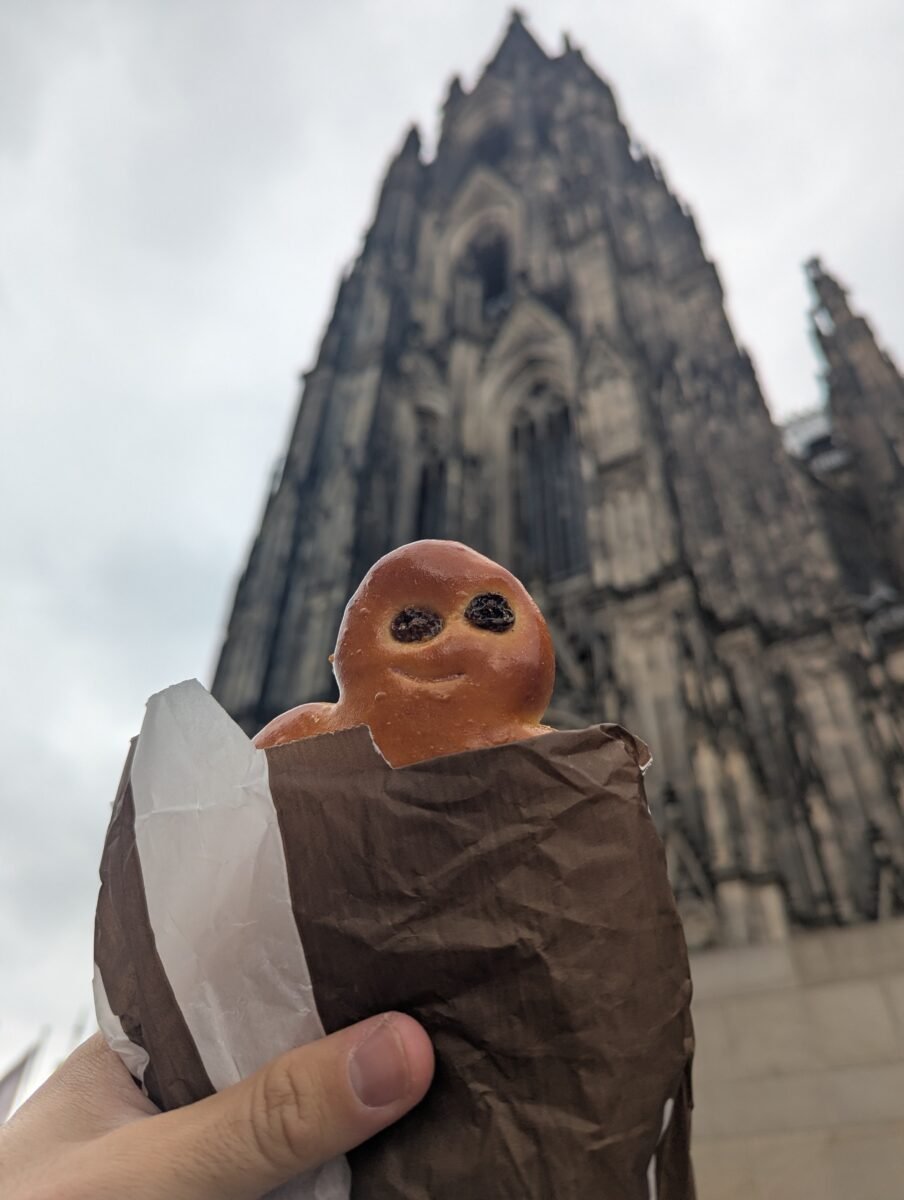
We didn’t manage to see much more. Our bus was to leave at 16:00, and we were too drained to move fast. It didn’t really matter. The cathedral, with some pretzels and Berliners, was more than enough. It was time to go. My cousin and I said goodbye exactly where we should have, on the train, as she got off at Köln Messe/Deutz, the very central station to this story.
This time, we all got off at the right stops. We reached the airport, and no surprises awaited us there. The bus was in its place, and we were on time. Apart from a grumpy bus driver, all was smooth. We took our seats and got ready to return to Liège.
Wohin gehst du, Deutschland?
If Europe were a machine, Germany would be its engine. It is the central cog in our union of different nationalities and ideas, for better or worse.
Nothing was rosy and definite three decades ago. From the 1990s to the mid 2000s, the economy was struggling with weak growth, persistently high unemployment, and the costs of reunification. It was frequently described as the sick man of Europe, a country in need of serious reform. That changed when the government introduced Agenda 2010 and a series of labour-market reforms. Alongside wage restraint, strong industrial capabilities, and growing export demand, these measures helped Germany, at least in part, to regain its competitiveness.
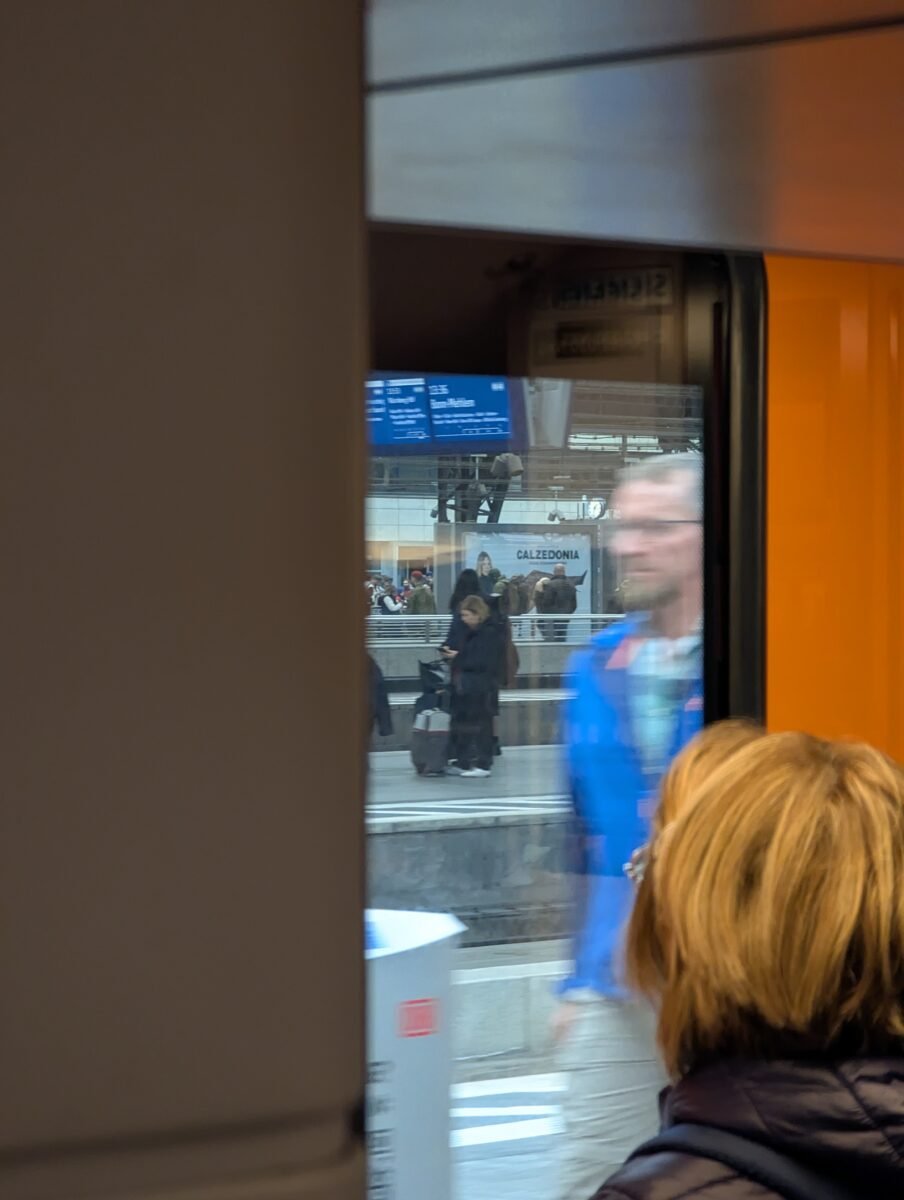
After those troubles, Germany spent the next fifteen years looking like a stable, well-oiled, perfectly tuned machine, a proper schunkeln. Driven by its signature strengths in cars and machinery, its economy grew from about 2.9 trillion dollars in 2005 to over 4 trillion by 2021, with a predictability everyone could feel. The whole country felt as if it were on a single set of rails, speeding forward, calmly, toward success.
Angela Merkel, Germany’s chancellor, became the embodiment of that growth and stability. Even through some of the union’s toughest years, thanks to some gambling brothers on Wall Street and some horrible borrowers *coughs in Greek*, her word, her finance minister’s, and Germany’s, was as good as a contract. What they said was what would happen. Over sixteen years in office, from 2005 to 2021, she did something rare in modern politics. She stayed popular, both at home and abroad (PewResearch, 2021).
So everything ran smoothly, inside safe German-built carriages, led by a driver who inspired calm and trust.
Or so we thought.
Every model works only under specific inputs and conditions, and Germany’s was no different.
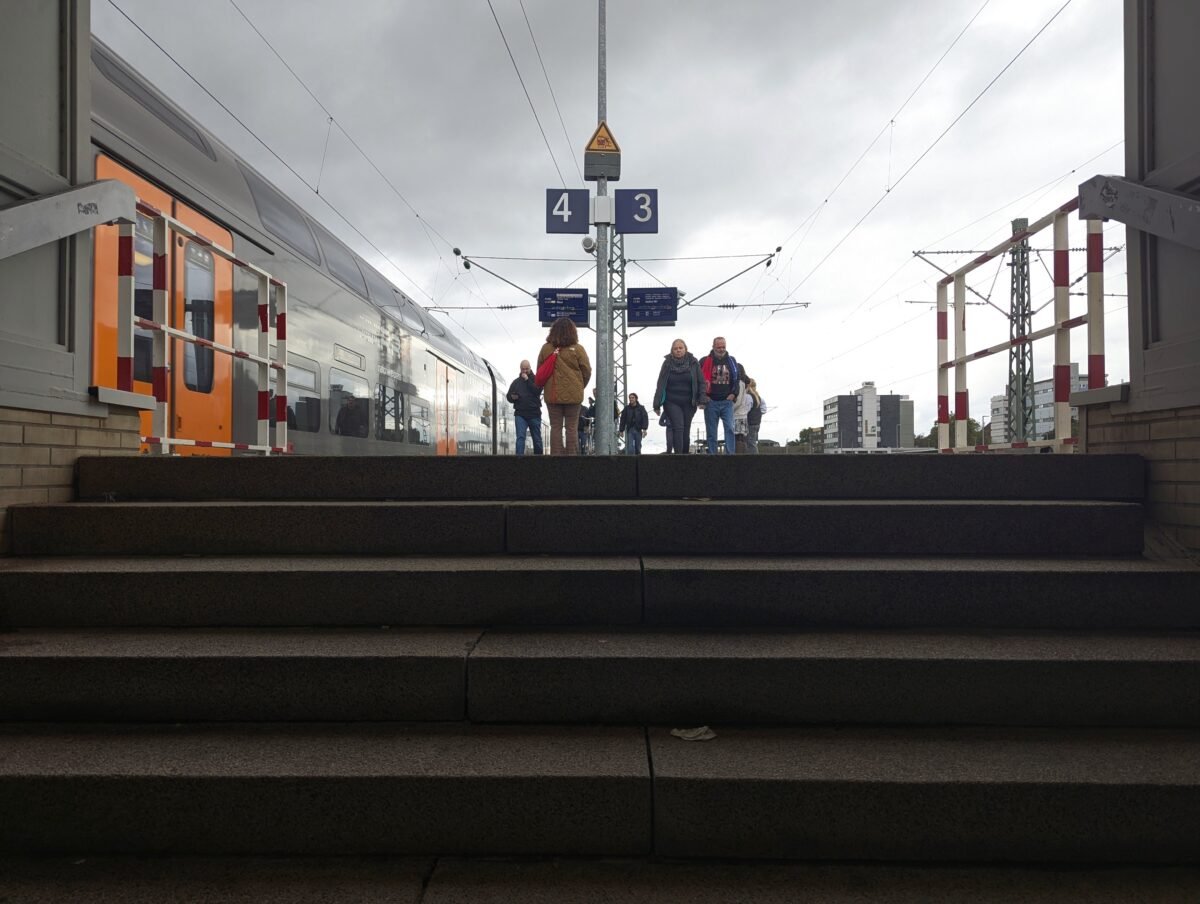
It built its reputation on high-quality, complex physical products, which need both suppliers and customers. Russia became the supplier, with cheap gas and raw materials. Before the war, 55% of the gas Germany consumed came from Russia (Bundeswirtschaftsministerium.de, 2022). China, meanwhile, ranked as Germany’s largest trading partner from 2016 through 2023, before briefly losing that position to the United States in 2024 and regaining it in 2025, being both a major customer and trade partner (Yahoo News, 2022; OsnaNews, 2026).
Germany was the machine in the middle, producing what no one else could, needing cheap inputs to stay competitive and eager buyers as its raison d’être. To deliver that quality, it locked itself into a seriousness and a bureaucratic complexity that suited that era.
Times change, people change, and so do nations. Sometimes, though, they don’t, and we’re just foolish enough to convince ourselves otherwise.
Germany got lost in its success, thinking it would never need to reinvent itself. All those complex systems, a railroad of inputs and outputs connecting everywhere, kept delivering pristinely, only a tiny bit slower each time. A breakdown here, a crash there, a bang somewhere else, but the network stayed operational.
Things seem to work so well, until you’re inside them, until you need them to.
Wo bist du, Deutschland?
Volkswagen is German for “the people’s car”. It has long been one of Germany’s biggest names and employers, a symbol of German engineering itself.
It is a sign of the times Germany faces, when that symbol announces 100,000 job cuts by 2030, about 15% of its workforce worldwide, and the largest restructuring the car industry has ever seen, under pressure from Chinese competition and US tariffs. The plan could also bring VW’s first full-scale factory closures in its home country. A shift that big is impossible to ignore (DW, 2026).
Recent German governments have tried to fix this by doing the unthinkable in German economics. Attempts were made to stimulate public spending, offer competitive incentives, and even commit the biggest sin of them all: deficits (CNBC, 2025). But it all runs in a system that’s too constrictive, too slow, with a backlog of problems that are impossible to solve by hopelessly throwing money at.
Germany has always been stereotyped as rigid, especially by Mediterraneans who live a more lax, less planned life, but that rigidness is what delivered results that no one else could at the time. And yes, it’s a rigidness that takes you where you want to, if the destination remains from A to B, with the safety of its rail tracks.
Yet what happens when your tracks, your trains, our whole system stop working as they used to?
Yet what happens when B is no longer the right destination, and you’re heading straight to nowhere, as if life were still a blur?
“If you get on the wrong train, get off at the first stop. The longer you stay, the more costly the return trip becomes”
Opening the Door
Heading back, our bus made a small stop in Aachen. The bus driver, starting from Bucharest and driving all the way to Amsterdam, definitely needed the break.
We had already figured he was in a bad mood back at Cologne’s airport. One of my classmates hadn’t had her passport ready, and he lectured her, rather rudely, that she must always show it together with her ticket. Neither of us said anything.
In Aachen, a woman got on and showed the driver her ticket. He asked for her passport. This time it wasn’t absentmindedness or fatigue. She lived in Brussels, she explained, and had left it at home. She had somehow made the outbound trip without it and wished to reunite with it back home, but now the already agitated driver wouldn’t let her on.
- Please, you can see I have a return ticket! I know I am at fault, but I didn’t know. I need to return…
- I understand, but I am doing my job! How could I let you on without your passport?
- Please, please be a bit flexible. I need to get in and return today; what will I do here?
The conversation went on for about a minute or two, without consensus. I was listening closely and felt a bit scared for her, having seen the driver’s rigidity firsthand. But then, it hit me.
“Hey, why can’t she show you a scan or a photo of the passport?” I shouted from the back.
I didn’t speak much after; I just hoped this would work. The bus driver remained silent. The woman was already scrolling through her phone, searching. Some agonizing moments passed, and I felt a tension I had willingly made mine as well. Until:
“Do you have a photo of the passport, at least?” he asked, a hint of compassion escaping his exhausted voice.
“Yes, here!” she exclaimed.
They talked it over for a moment, and then she was on board. She didn’t look at me, but as she passed down the aisle to find a seat, I heard her say, in a low, relieved voice,
“Thank you, really.”
Footnotes
Message 1: The Greek summer will be delayed, as I’ve got another banger lined up from Belgium. Stay tuned, as it will arrive by the beginning of December at the latest!
Message 2: To my readers, a big thank you. Thank you, because this has been truly one of the most satisfying projects on this blog for quite a while. I hope you enjoy it as much as I do!
And thank you, because this will send me on an unexpected journey a fortnight from now. I have been selected for something I am very, very proud and excited about. Not as a professional, a marketer, or a potential entrepreneur, no; I have been selected as a storyteller, as a writer, particularly on heritage, which this series is also very much about.
I have been invited as a finalist to UNESCO’s 2026 International Youth Forum on Creativity and Heritage along the Silk Roads, 15 to 21 November in Changsha and Nanjing, People’s Republic of China. The theme is youth-led heritage expression in the age of AI, and I am going there for the first time as a creative writer, rather than a professional. It gives a whole new meaning to the experience, fueling a passion that has burned in me for so, so long.
Without this series, I would have never applied. And now, I will make a dream come true. Two, in fact. Showing my creative side to the world, and exploring one of the most, if not the most, monumental countries in the whole of world history: China.
And, yes, for sure there will be a blog about it, also soon.
References
admin. (2022). How can we get away from gas? Bundeswirtschaftsministerium.De. https://energiewende.bundeswirtschaftsministerium.de/EWD/Redaktion/EN/Newsletter/2022/03/Meldung/direkt-finds-get-away-from-gas.html
Ford, M., & Tamsut, F. (2026, September 4). Volkswagen to cut 100,000 jobs by end of decade. Deutsche Welle. Dw.Com. https://www.dw.com/en/volkswagen-to-cut-100000-jobs-by-end-of-decade/a-78896123
Kiderlin, S. (2025, March 18). German parliament passes historic debt reform, paving the way for higher defense spend. NBC Southern California. NBC Los Angeles. https://www.cnbc.com/2025/03/18/german-parliament-to-vote-on-fiscal-package-that-could-bring-historic-reforms.html
Osna.FM. (2026, February 20). China surpasses the U.S. as Germany’s largest trade partner in 2025, imports surge while exports decline. Osna.FM. https://news.osna.fm/china-surpasses-the-u-s-as-germanys-largest-trade-partner-in-2025-imports-surge-while-exports-decline/
Pew Research Center. (2021, September 22). Merkel will end her tenure in office as a leader who was internationally popular during tumultuous times. https://www.pewresearch.org/short-reads/2021/09/22/merkel-will-end-her-tenure-in-office-as-a-leader-who-was-internationally-popular-during-tumultuous-times/
Tan, H. (2022, November 24). Germany — Burned by overrelying on Russian gas — Now vows to end dependence on trade with China. Yahoo News Canada. https://www.businessinsider.com/germany-scholz-reliance-russia-energy-gas-end-dependence-china-trade-2022-11
Comments are closed.